
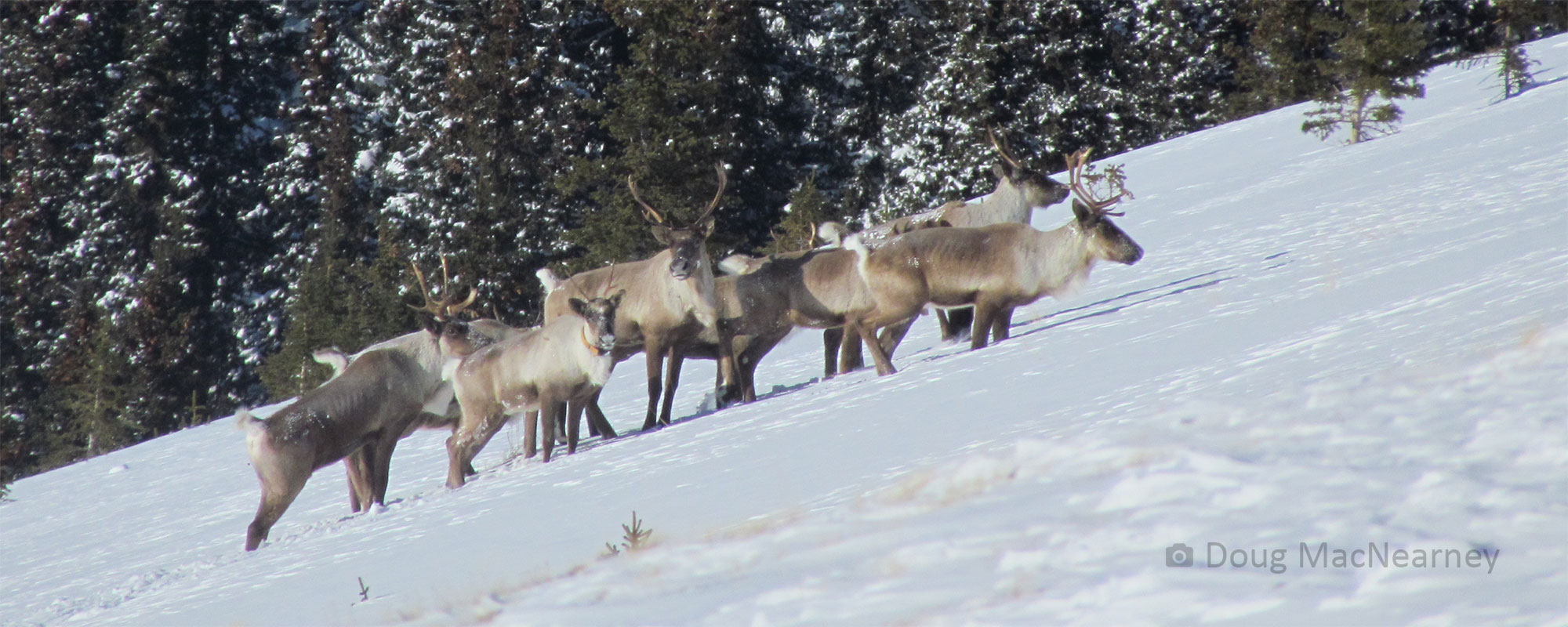
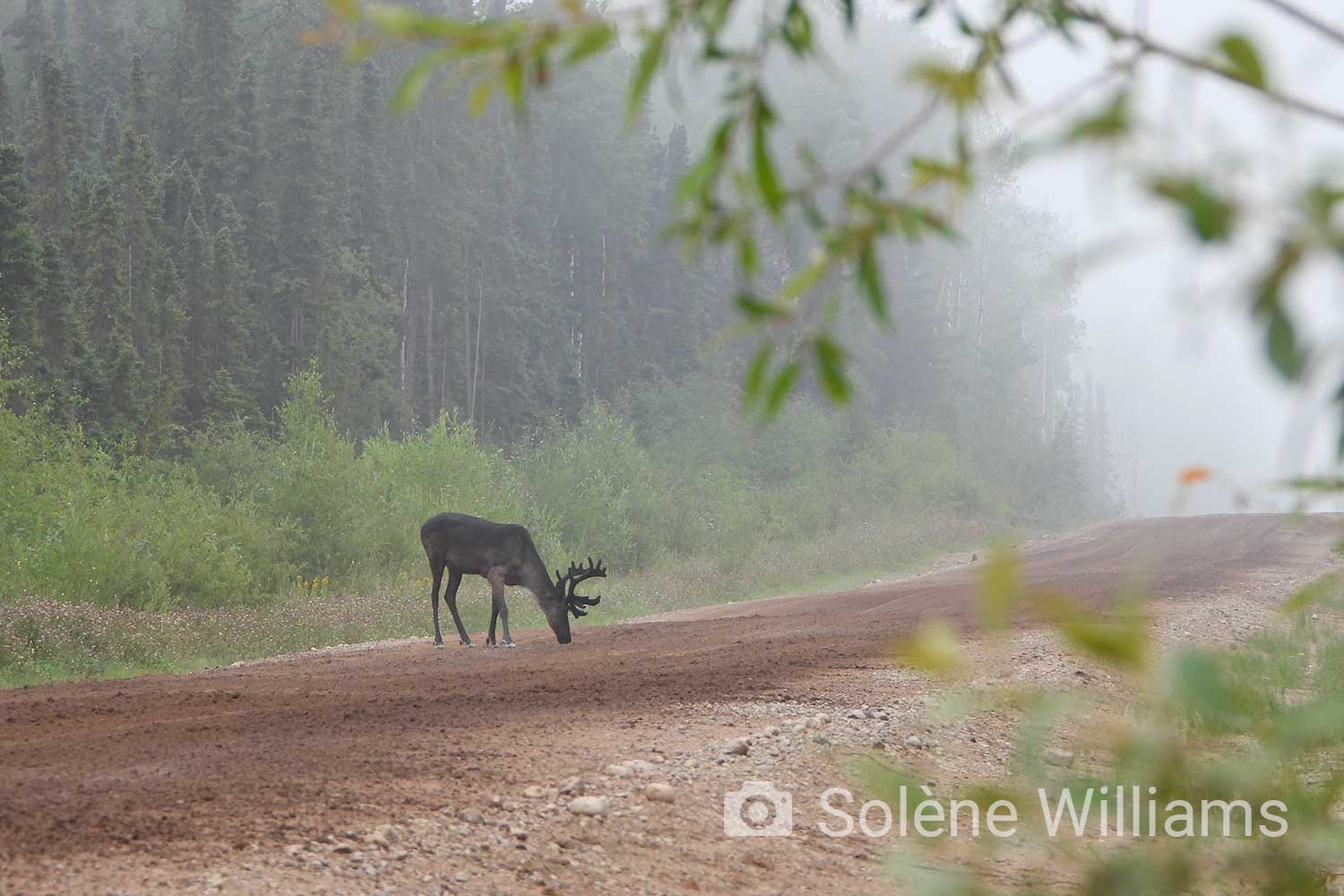
Roads are a threat to caribou. In west-central Alberta, Highway 40, connecting Grande Prairie, Grande Cache and Hinton, is a two-lane highway with an average speed limit of 100 km/h and an annual average of 1,300 vehicles/day. This highway transects the À La Pêche caribou range; the herd must cross the highway twice a year to move between summer and winter habitat. Road traffic accidents are a source of caribou mortalities, reaching 32 individuals struck by vehicles in 1991 and 1992 alone.
The Aseniwuche Winewak Nation started a stewardship program called Caribou Patrol in 2012 in response to declining caribou populations, as caribou are an important cultural keystone species for the Nation. The Caribou Patrol conducts road patrols along Highway 40 during the fall and spring À La Pêche migrations, and periodically throughout the remainder of the year, looking for caribou on the road and diverting them off the road or alerting drivers to slow down. The success of Caribou Patrol is admirable but has a key limitation: the patrol only operates during daylight hours to maintain the safety of its patrollers. Therefore, a virtual fence operating in lowlight and nighttime hours could work in tandem with Caribou Patrol operating during daylight.
We conducted a comprehensive literature review to assess the feasibility and challenges of applying a pilot virtual fence project for the À La Pêche caribou population within the Highway 40 wildlife corridor in Alberta, Canada. A pilot study assessing the functionality of virtual fence technology under environmental conditions typical of northern latitudes, combined with monitoring wildlife behavioural responses (specifically ungulates and caribou), would provide important information for evaluating the applicability and effectiveness of this technology long-term in northern systems.
