Developing New Monitoring Guidelines
Developing more efficient methods for monitoring grizzly bears in Alberta.
Since 2023, Dr. Darío Fernández-Bellon has led our grizzly bear research with a focus on developing more efficient monitoring methods. Simultaneously, we are generating new data on grizzly bear populations and maintaining critical tools so that bears can be managed on a solid scientific basis.
Fine-tuned Field Methods
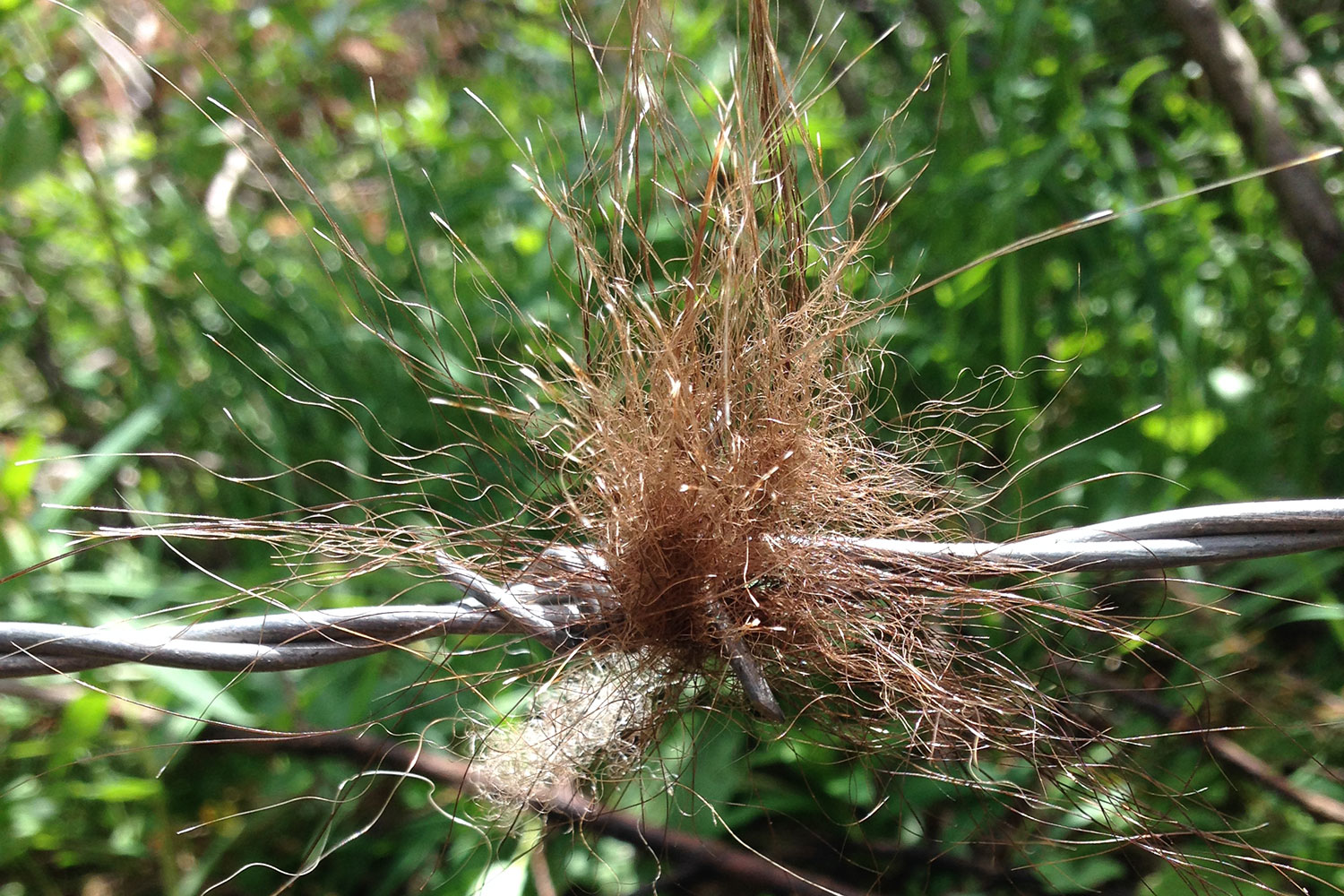
The field work is simple: a string of barbed wire and a scent lure. When a curious bear investigates, it leaves a tuft of hair on the wire, which we collect on our next visit. But there is room to improve in several different ways.
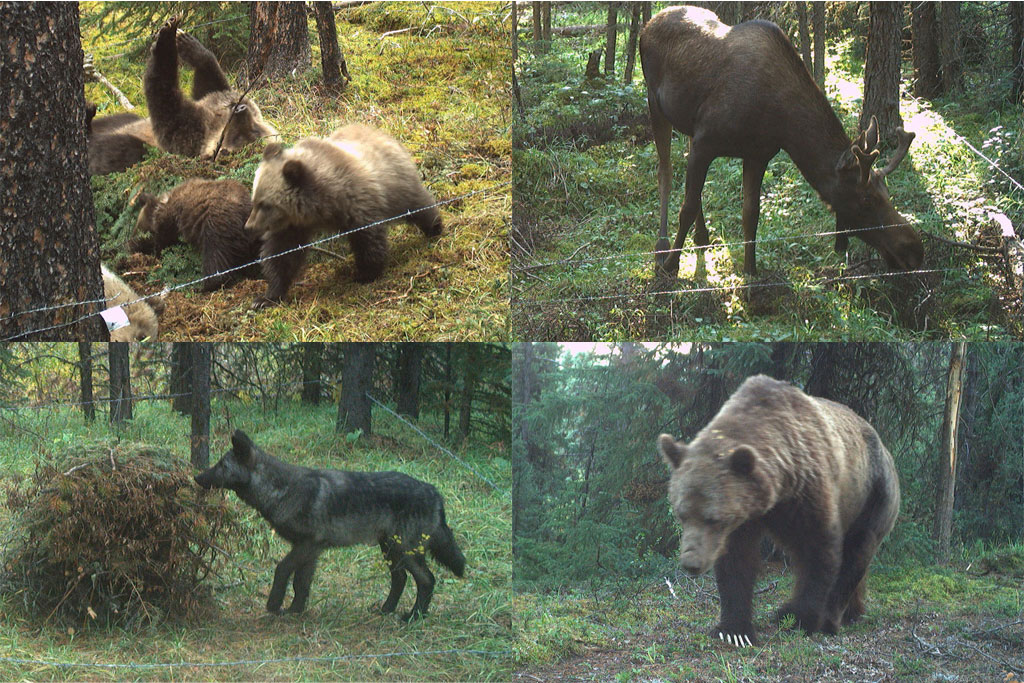
One was setting up a trail camera at each site. While this adds to the cost per site, the cameras pay for themselves by letting us see which hair tufts came from the same bear, reducing the amount of hair we need to send to the lab, which has a significant cost per sample. Sometimes bears visit our sites but cannot be identified genetically – they don’t leave any hair, or enough hair in good condition for the lab – and the cameras confirm their presence and give us some information such as age class and possibly sex.
We also want to improve the scent lure. We’ve always used cattle blood. Beginning in 2023 we have been testing commercial alternatives such as fish fertilizer, molasses, bacon spray, synthetic berry syrup, and anise oil. Several seem to be about as good as the blood, and interestingly, some seem to be better at attracting one bear species than another. Having a lure that is attractive specifically to grizzly bears would be helpful, as black bears (and sometimes other animals) will destroy the hair snag sites, costing us valuable hair samples.
We’re also tweaking the layout of the hair snag sites. Grizzly bears seem to particularly like rubbing on trees, and we are taking advantage of this by adding some barbed wire to a tree at some sites.
Streamlined Study Design
Full population inventories are enormous efforts. They involved setting up over 200 hair snag sites, many in extremely remote areas that could only be accessed by helicopter. The sites themselves are relatively simple, but they must be revisited six to eight times in the summer to collect the bear hair, from which our lab partners can extract DNA and let us estimate the population size in the area. As a result, only a few of the province’s seven Bear Management Areas have been surveyed more than once to establish population trends, and some have not been surveyed since 2008.
But a population size estimate might not be necessary to answer the critical questions land managers have. Our goal is to drastically reduce the number of sites, potentially cutting the cost by two thirds right from the beginning, while still getting essential information including the density of bears in an area, the population trends in an area, and bear occurrence at the edge of their home range. We are trialing different subsets of sites that would normally be surveyed as part of a full population inventory to find the most effective configuration.
While this pared-back study design won’t give a definitive population estimate, it would make it feasible to do much more frequent population monitoring and provide land managers with better information than sporadic population estimates with long time gaps.
More Data per Sample
Our lab partners have been adept at extracting DNA from the follicle at the root of grizzly bear hairs. This lets us identify individuals, family relationships, and the bear’s sex. Unfortunately, it doesn’t tell us about the life stage of the animal – how many of the bears we identify are cubs, subadults, or adults, and whether they are pregnant or caring for offspring. Population structure and reproductive rates are fundamental population parameters that would tell us something deeper than a static population estimate; they would help us understand the drivers of population changes.
But hair contains more than just DNA. Whether a bear is male or female, young or old, stressed or healthy, pregnant or lactating is reflected in the proportions of hormones circulating in its blood, and those hormones are deposited in the bear’s hair and other tissues. We are working with the proteomics lab at the University of Victoria to refine techniques for extracting the relevant hormones from our archive of thousands of hair samples, and decode what they say about each individual bear.
Our archive of hair samples spans decades and many Bear Management Areas. Being able to determine the age and pregnancy status of even a subset of those samples would allow us to reconstruct grizzly bear population trends over the past twenty years in much more detail. And dialing in this technique would increase the value of every future hair sample that we collect.
Staff hired and trained; fieldwork protocol developed.
The crew begin setting up hair snag sites and collecting habitat data in BMA 3
Nearly 300 grizzly bear hair samples and over 50,000 trail camera photos and videos collected
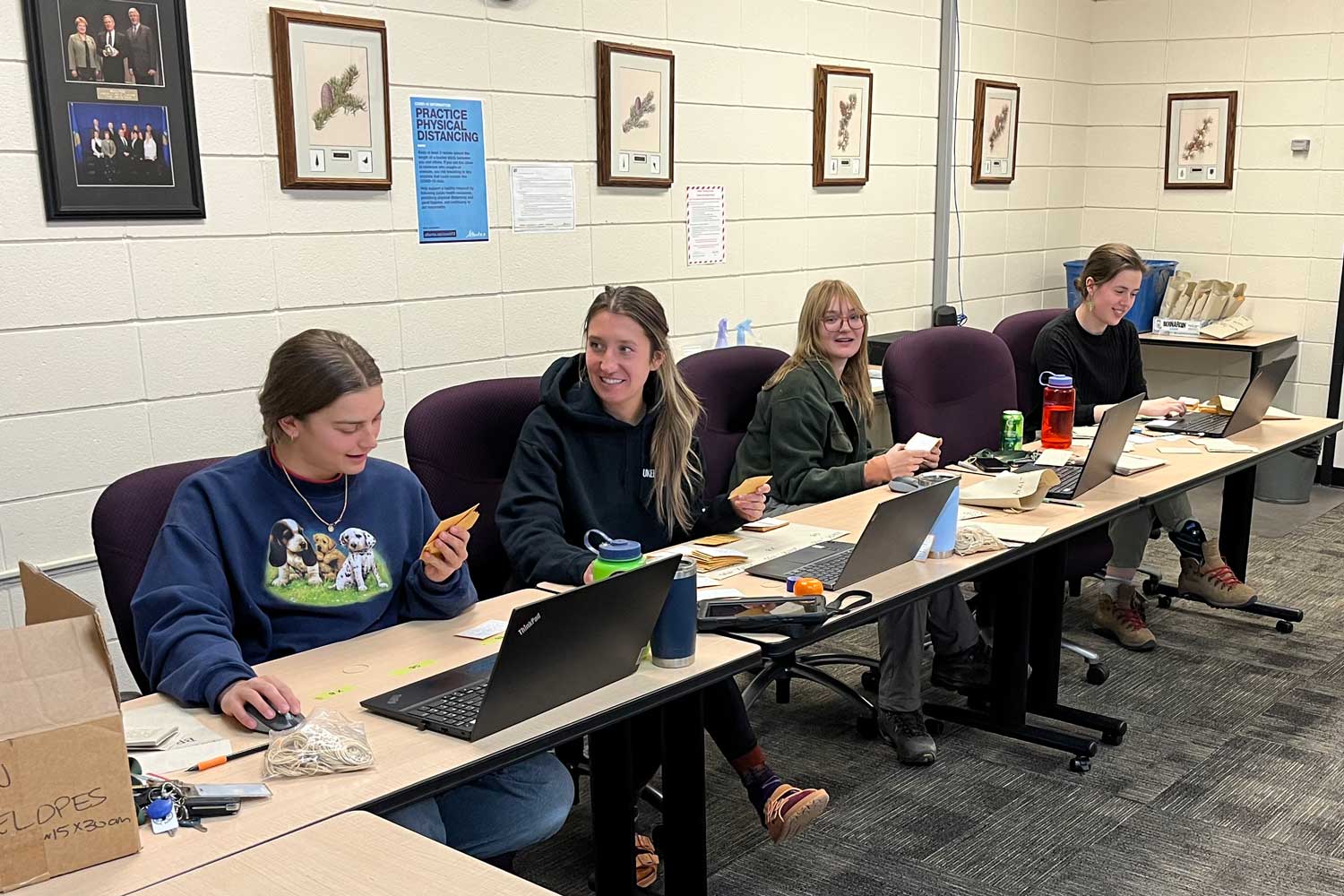
Grizzly bear hair sorted and selected for DNA analysis.
31 grizzly bears identified from hair samples
6 field technicians arrive in Hinton to start training for the upcoming season
Nearly 1,100 grizzly bear hair samples collected from the eastern edge, BMA 3, and BMA 4 sent to the lab for DNA analysis
9 field technicians trained for the 4th field season
Nearly 2,000 grizzly bear hair samples collected
4 field technicians hired for the 5th field season, which will include BMAs 2 and 3
B
- Bighorn Mining
J
- John Nyssen
L
- Larry Gruenke