From the Introduction
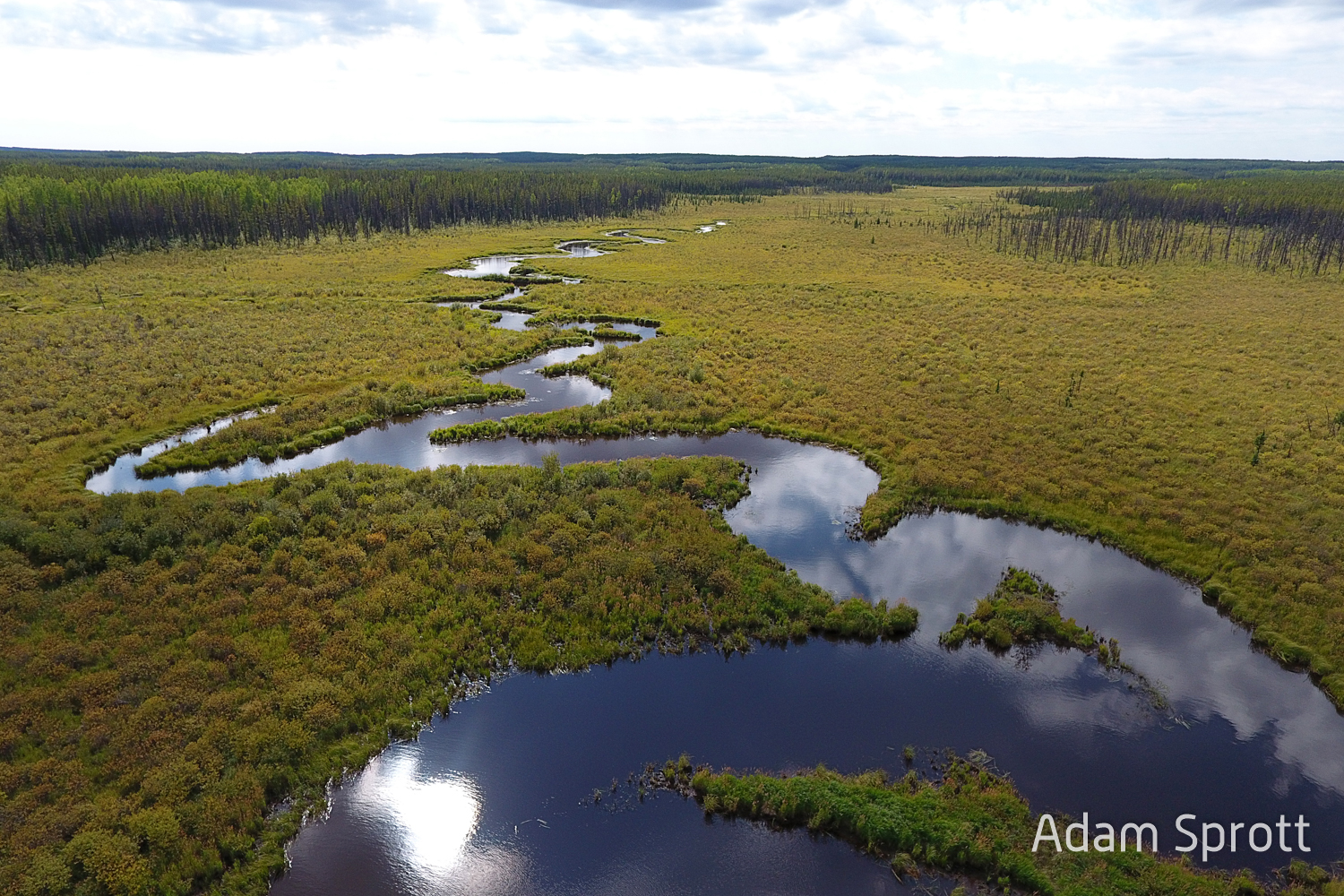
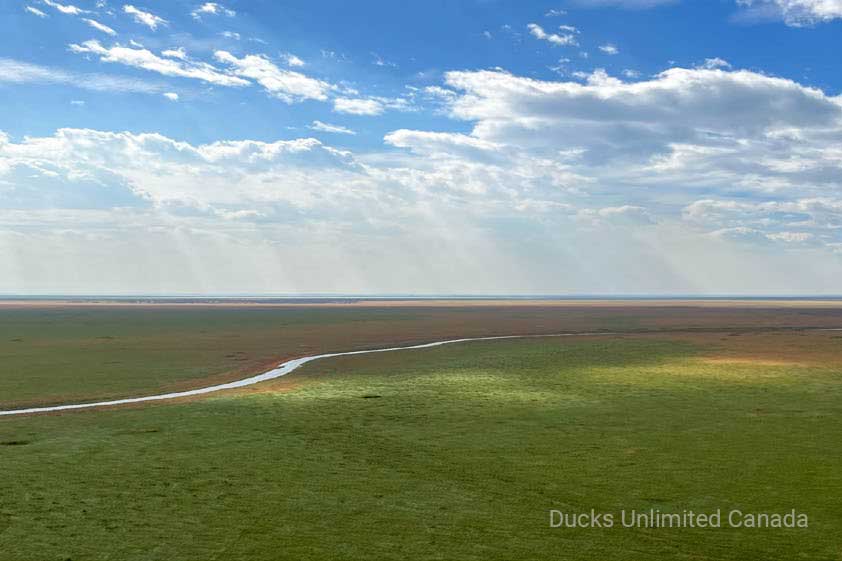
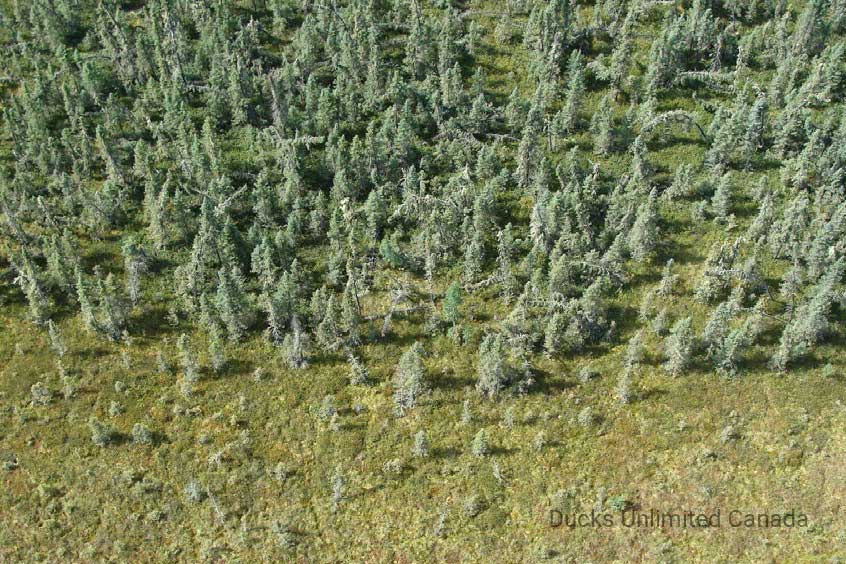
This report addresses Objective Two of the Whole Landscapes Approach project, and is complimentary to “How does the HLP Define a Whole Landscape”. Wetlands are not the only ‘other’ component of a whole landscape, in Canada’s western boreal forest, but wetlands make up a significant portion of the non-upland area and are critical to the functioning of upland forests. Wetlands cover over 1 million km², constituting more than 35% of the western boreal forest land base. They support ecosystem functions that provide carbon storage, water regulation, habitat, and many other ecological, social, and economic services. For these reasons, wetlands are the focus of Objective Two. A similar review could be applied to other ecosystem types (e.g., grasslands, montane, etc.).
The overarching purpose of Objective Two is to summarize current knowledge and research, available
resources, key researchers and organizations, and knowledge gaps in key wetland related topic areas relevant to the HLP with the goals of:
- Providing an overview and introduction to boreal wetlands for HLP members;
- Identifying areas of intersection between wetland topics and the HLP;
- Summarizing key wetland knowledge gaps relevant to the HLP; and,
- Developing a roadmap identifying opportunities for future research.
To achieve these goals, we conducted a literature review presented as a series of topic-based factsheets. The topics for the factsheets were chosen based on the priority needs and interests of the HLP. The first section builds the foundational understanding of wetland ecosystem function, values, and connections on the landscape. The second section explores key natural disturbances affecting boreal wetland ecosystems. The third section highlights key effects of anthropogenic activities on boreal wetlands that need to be considered when conducting ecosystem based management across the whole landscape. Factsheets can be read individually or collectively and are organized into three sections. At the end of each section we have summarized knowledge gaps organized by factsheet topic.



At the end of the report, we provide a road map for the HLP, identifying priority knowledge gaps along with a list of wetland researchers and organizations. This review enhances our understanding of wetland importance, ecological function, and interconnectedness within the boreal landscape. In summarizing and presenting the information in an accessible manner, this project will support informed decision-making, guide future HLP project initiatives and promote a whole landscape approach to ecosystem-based management.
Citation
Ducks Unlimited Canada & fRI Research. (2024). A Review of Wetlands on the Landscape A Whole Landscape Approach to Ecosystem-Based Management: Part 2. Ducks Unlimited Canada.
Acknowledgements
This report was completed with input and writing from Ducks Unlimited Canada staff members including
Marissa Green, Jessie Lavallee-Whiffen, Kristyn Mayner, Carrie Mana, and Kylie McLeod. Thank you to the HLP Whole Landscape Project Team, including David Andison, Paul LeBlanc, Courtney Miller, and Christopher Watson. Thank you to the HLP Partners for providing funding to complete this review, including West Fraser Mills, Weyerhaeuser, Tolko Industries, Alberta Newsprint Company, Mercer, Alberta Pacific, and the Government of Manitoba.
Downloads