Abstract
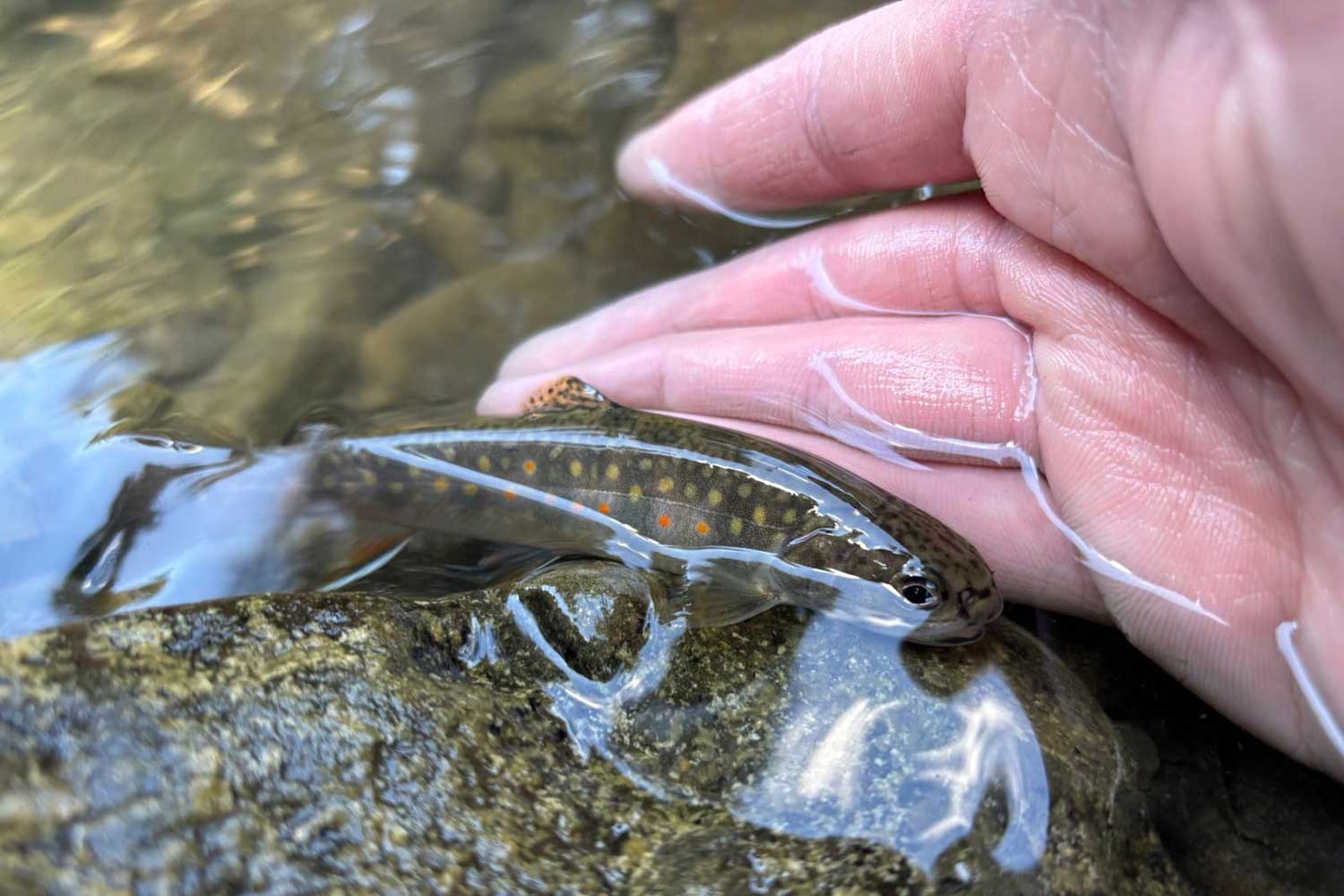
Understanding the extent of hybridization with non-native species is important for the conservation of native species. Bull trout (Salvelinus confluentus), a char native to Alberta, face population declines across their range and one risk may include hybridization with introduced brook trout (Salvelinus fontinalis). The extent of hybridization throughout Alberta, however, is not well understood. Therefore, we aimed to quantify bull × brook trout hybridization in three ways: (1) observed hybrid presence across Alberta, (2) post-F1 hybrid proportion, and (3) hybrid proportion relative to brook trout in well-sampled watersheds. Using two sets of diagnostic single nucleotide polymorphisms (1174 bull trout loci and 1499 brook trout loci), we identified 35 F1 and 7 post-F1 hybrids (n = 42) across 10 Hydrologic Unit Code 8 watersheds. Results show hybridization throughout bull trout’s range; however, they provide little evidence of extensive introgression. Misidentification was low (2.1%), though 20 of 42 hybrids were misidentified, suggesting a higher misidentification rate (47.6%). This work improves understanding of hybridization of at-risk bull trout and informs management decisions, such as limiting brook trout where possible.
Citation
Emily R. Franks, Benjamin C. Kissinger, Steve Amish, John R. Post, and Jonathan A. Mee. 2025. The extent of hybridization between bull trout (Salvelinus confluentus) and brook trout (S. fontinalis) across Alberta’s Eastern Slopes. Canadian Journal of Fisheries and Aquatic Sciences. 82: 1-13. https://doi.org/10.1139/cjfas-2025-0004