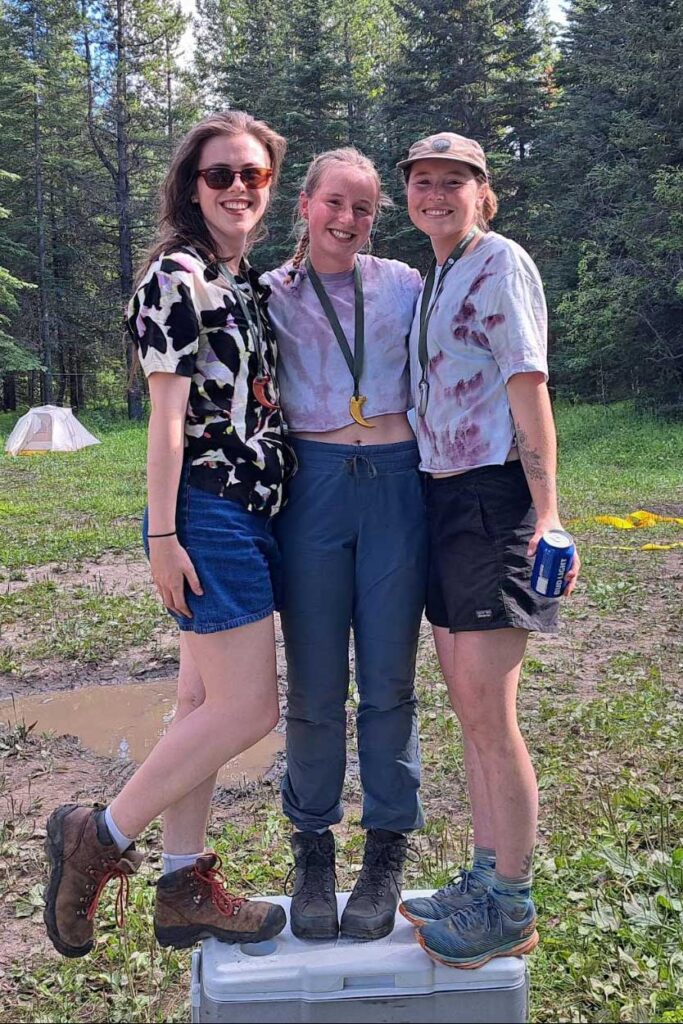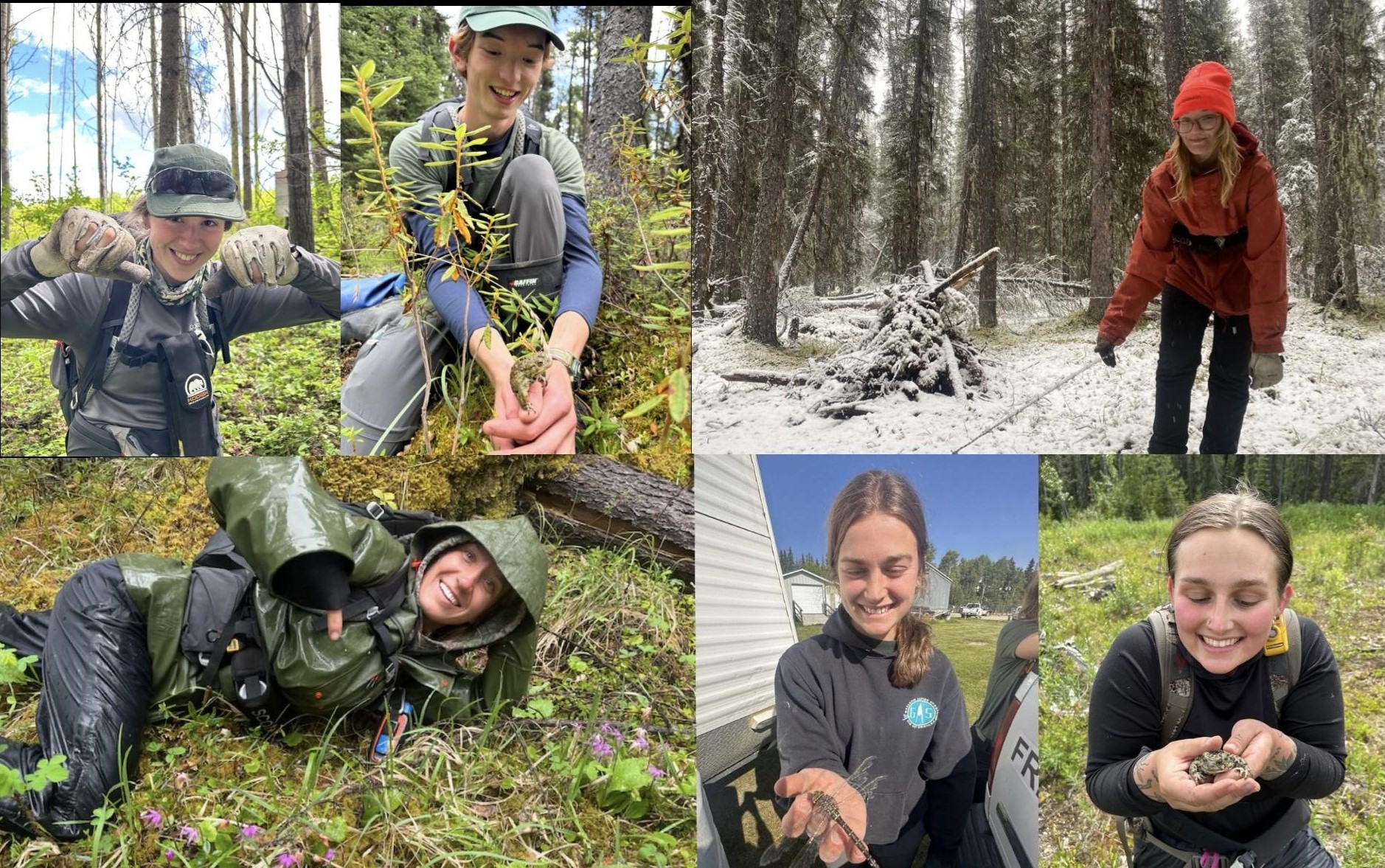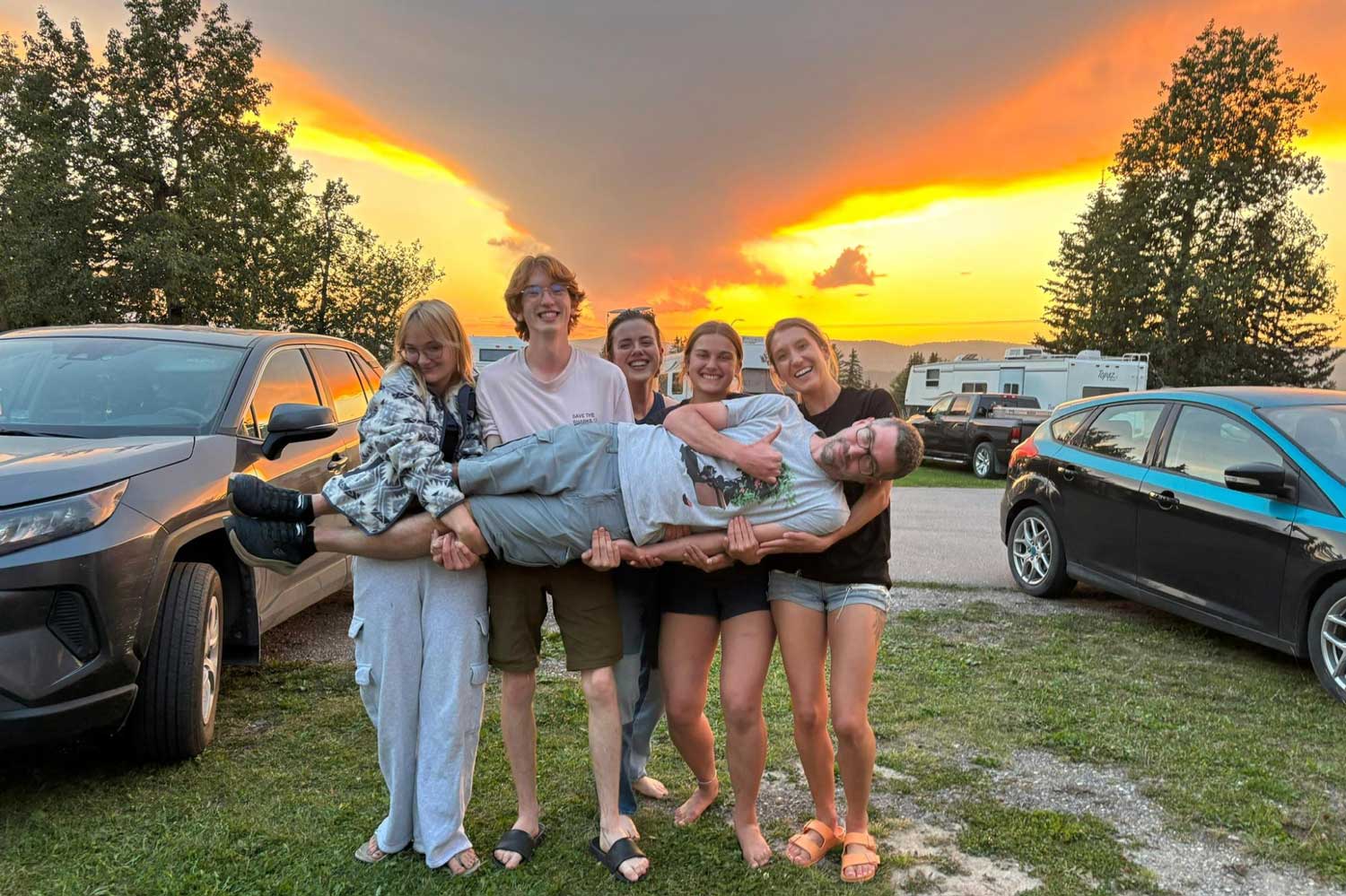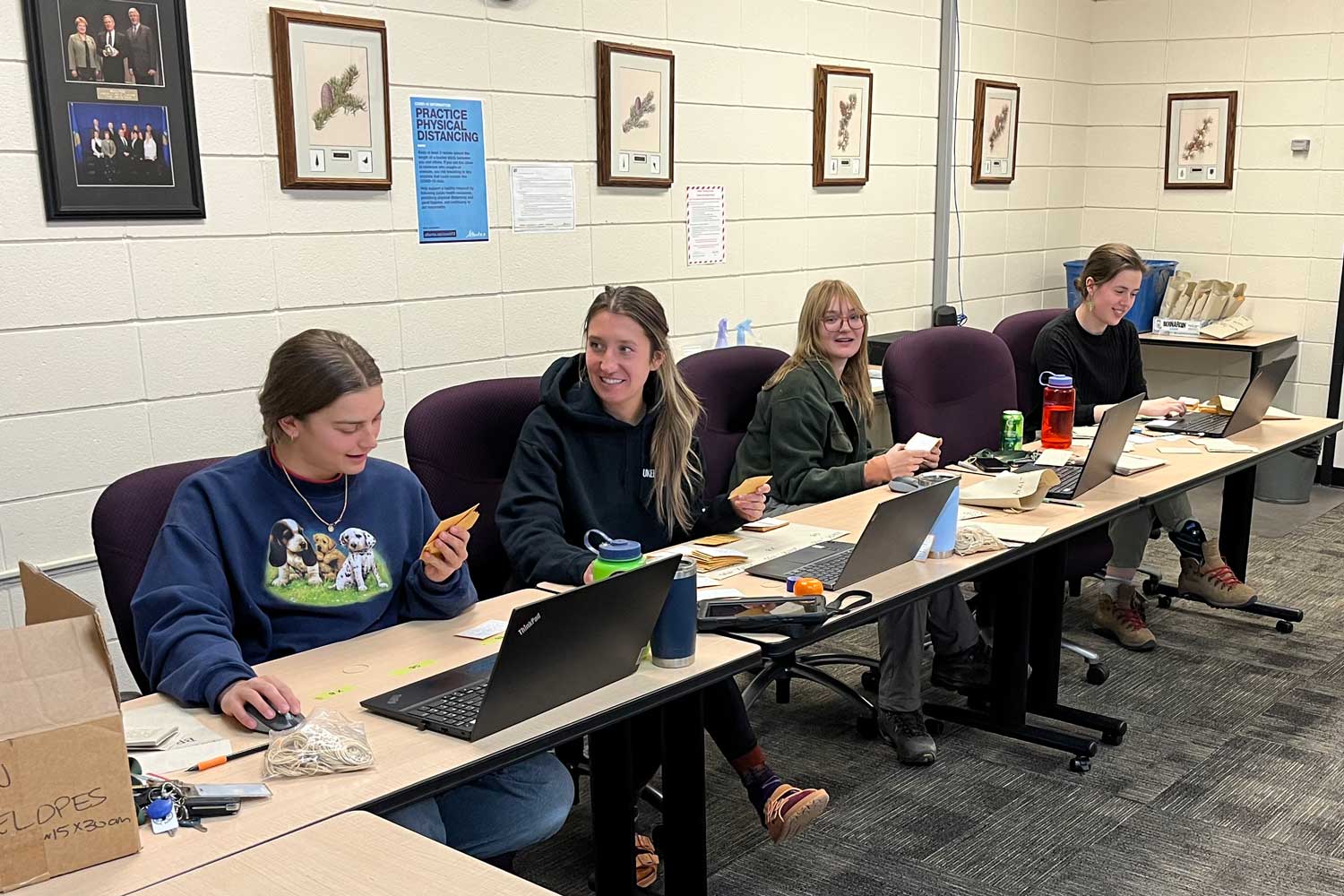
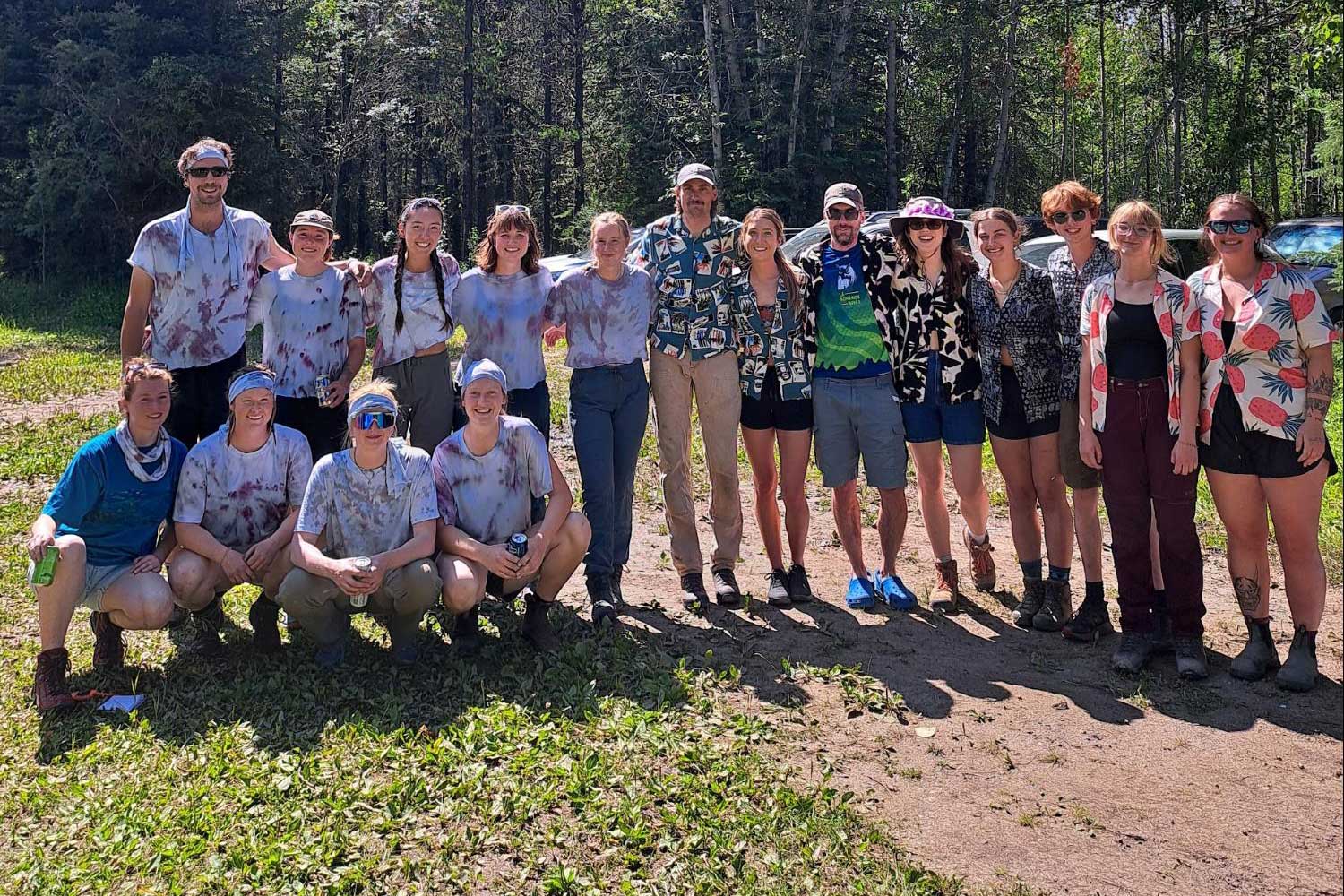
The competitors and organizers at the 2025 Field Tech Olympics.
Written by Sierra Makasoff and Sue MacKinnon; photos contributed by the whole crew.
With 118 regularly-checked hair snag sites scattered across the foothills from as far south as Highway 11 to as far north as Grand Prairie, the GBMP has a lot of ground to cover.
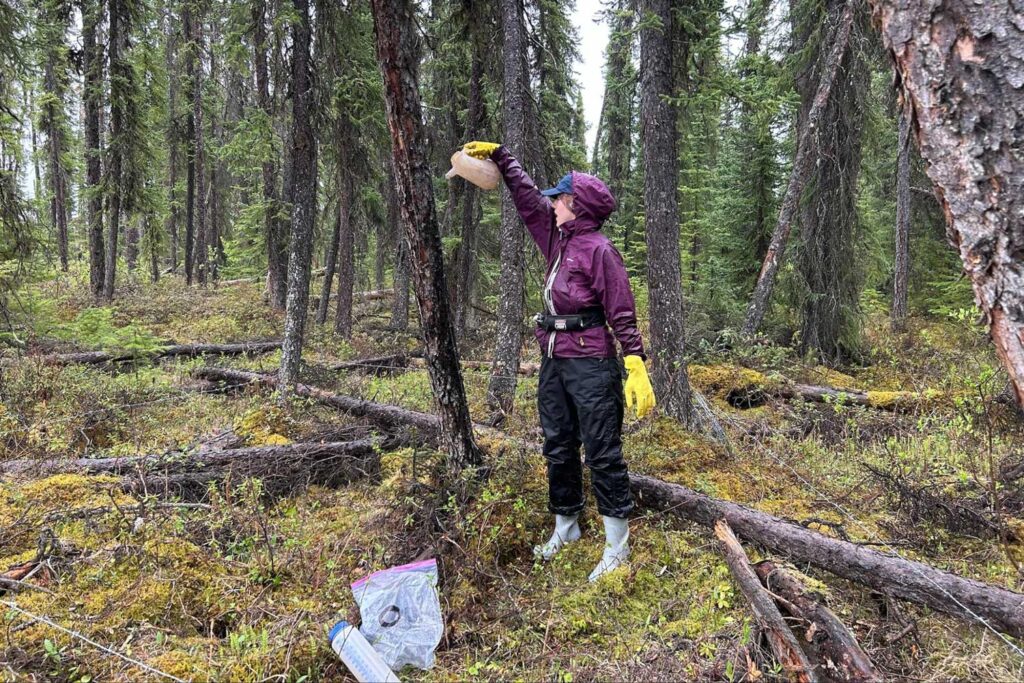
Typically, two crew members head north to Kakwa to tackle the 40 sites in the area. A normal day involves knocking out top priority sites (usually “dry access only” sites that were missed the shift prior), trying not to slip off the road following 2mm of rain, and finally plucking off clumps of hair from the barbed bait tree in triumph. In Bear Management Area 2, which includes all sites north of Hinton, the GBMP is testing out a new protocol this year involving pouring bait on trees instead of building vegetation piles, a method still used for sites south of Hinton. With the bait trees, the trail cameras always seem to reward us with screen-shot worthy pictures and videos of grizzly bears standing up and rubbing their backs on the bait trees.
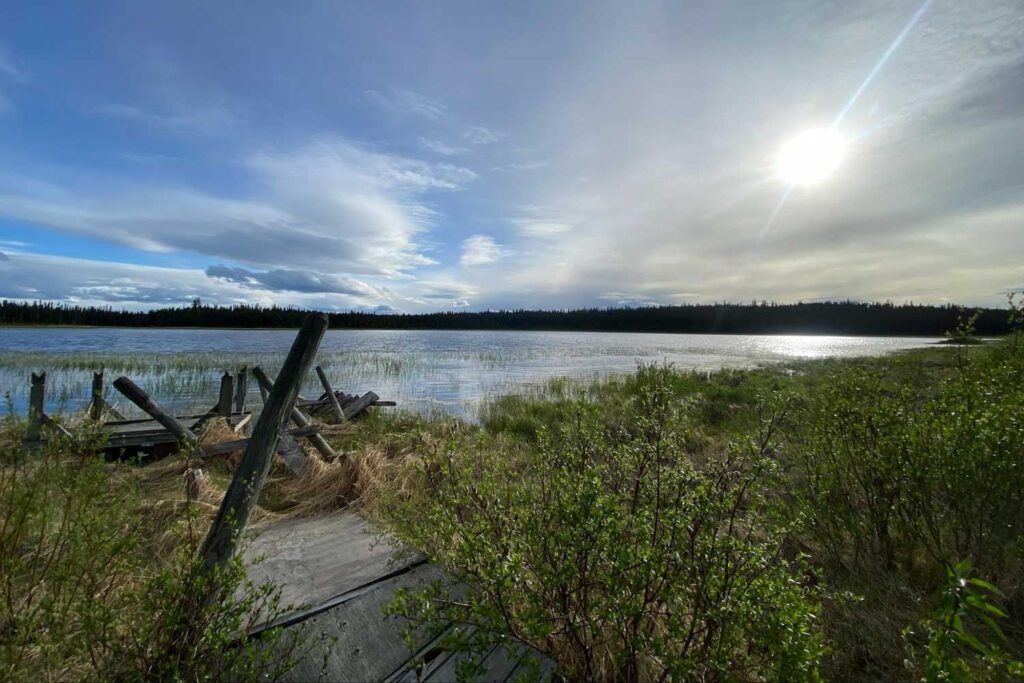
Work in Kakwa is great, but evenings spent off the clock were just as memorable. Back at Kakwa camp, comfort could always be found in the camp’s giant cookhouse, complete with a full sized fridge, an industrial sink, two stoves, and a toaster: luxuries forgotten about while living in the trailers. Aside from the kitchen, Kakwa had many other gems including the “leechy pond” which made for a great spot for yoga, amazing bird and wildlife watching opportunities, and a subpar swimming spot when in dire need.
Back in Hinton, the four other crew members would handle the 78 remaining sites.
Two crew members would tackle the 40 remaining sites of Bear Management Area 2, north of Hinton. Being in a high bear-density area was great for collecting hair, but it also meant we had to be on high alert and make as much noise as possible. Over time, we each developed our own signature calls to warn off any nearby bears. From loudly singing our favourite songs, to a booming “WE’RE COMING IN!!!!!” every creature in the forest was sure to know we were in fact, coming in. Despite our best efforts we still had a few run-ins with our hairy black bear friends. Thankfully, each encounter ended the same way: the bears were just as startled to see us as we were to them, keeping their distance and quickly moving on, or in some cases jumping out of the back of our pickup truck and scurrying into the woods (no, we don’t have photo evidence of this but ask Emma and she’ll draw you a very accurate picture of it).
While the four crew up north were perfecting pouring bait on trees, the remaining two crew members would be gathering sticks, moss, and spruce bows to build the perfect vegetation pile down south in Bear Management Area 3. Here bears were of course still the main focus, but many other critters were often out and about triggering our trail cameras. Some of these include cougars, wolves, wolverines, and lynx. These sightings would always be described in great detail back at the trailer park while the other two of us listened wide-eyed, racking our brains on the day to come up with something to offer that would measure up.
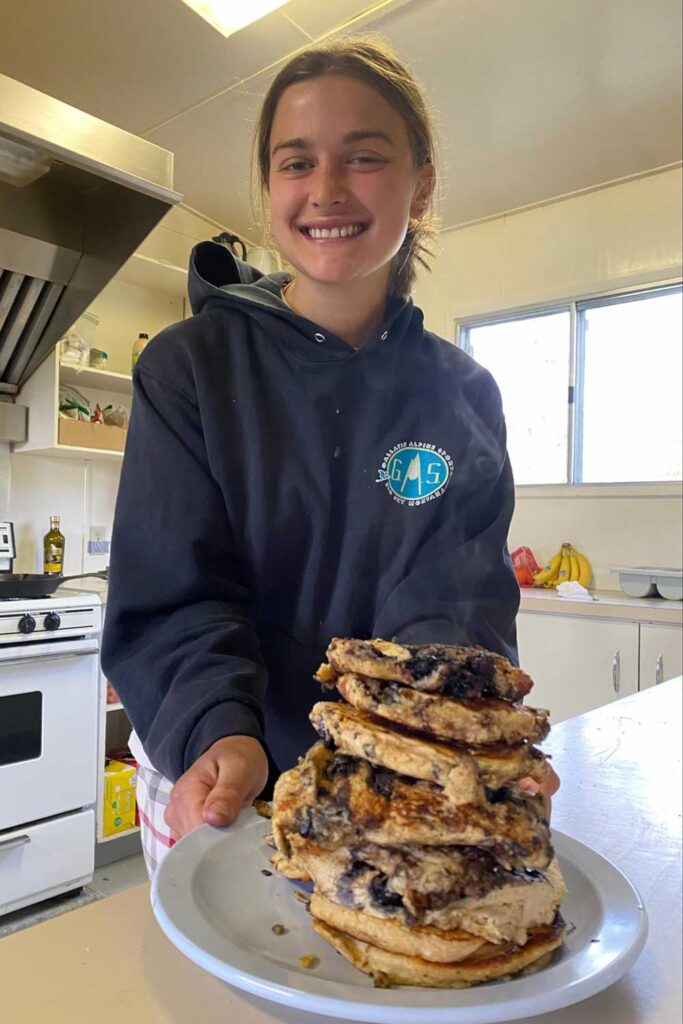
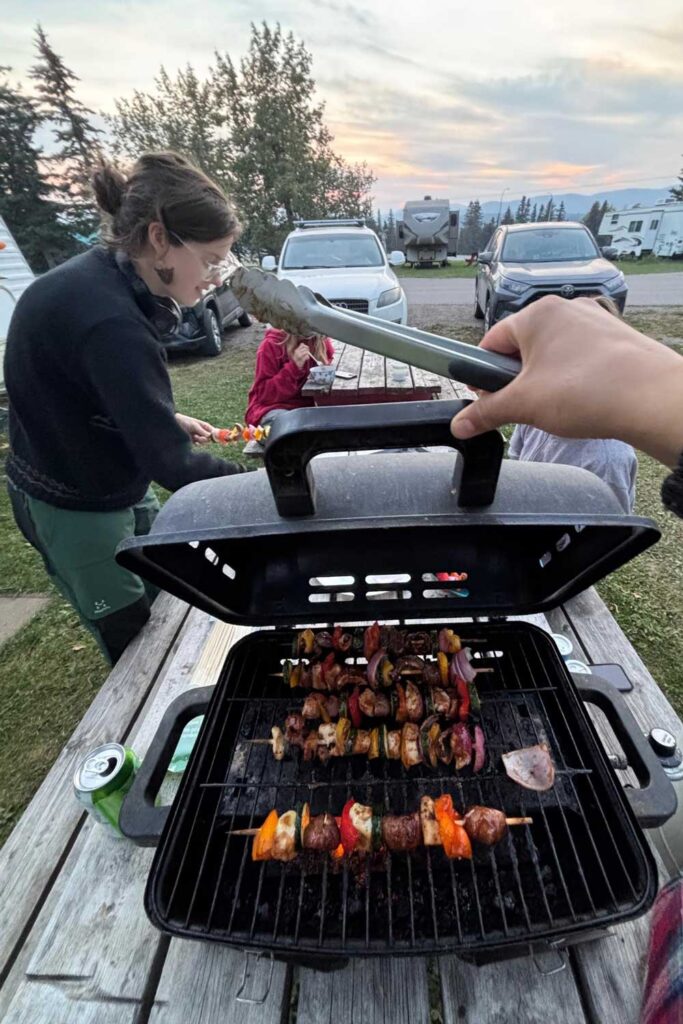
On the last morning of shift, we would usually reward ourselves with a pancake breaky at the trailer park. After a nice slow morning of blueberry pancakes, whipped cream, and mochas, the crew would head to the office to greet the Kakwa crew. The six of us would work together to unload the trucks, organize gear, and replenish scent lures, tasks that were all made easier by catching up and sharing our “rose buds and thorns” of the shift.
Towards the end of July, we started to notice our stash of filtered blood that we were promised would last, “for the whole summer,” was dwindling away. After a quick inventory, the truth was undeniable, we were in fact, running out of blood. Which meant only one thing, it was time to filter and strain buckets on buckets of cow blood, yet again, and perfect for us we had the help of Charles and Tyler (lucky them!). So, once more, we suited up and headed out to get to it. Some might say we genuinely ran out of blood, others might say Darío and Cam planned it this way so they could escape the office for a day. Whatever the truth is, we filtered and strained those buckets of blood in record time, while questioning our sanity, but nonetheless making great memories.
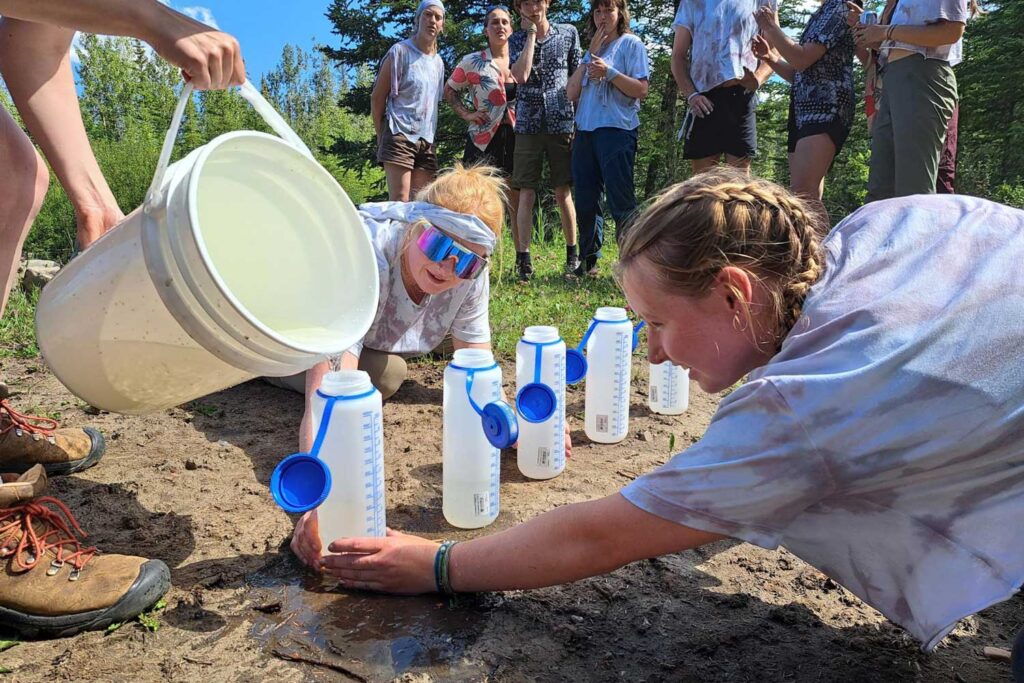
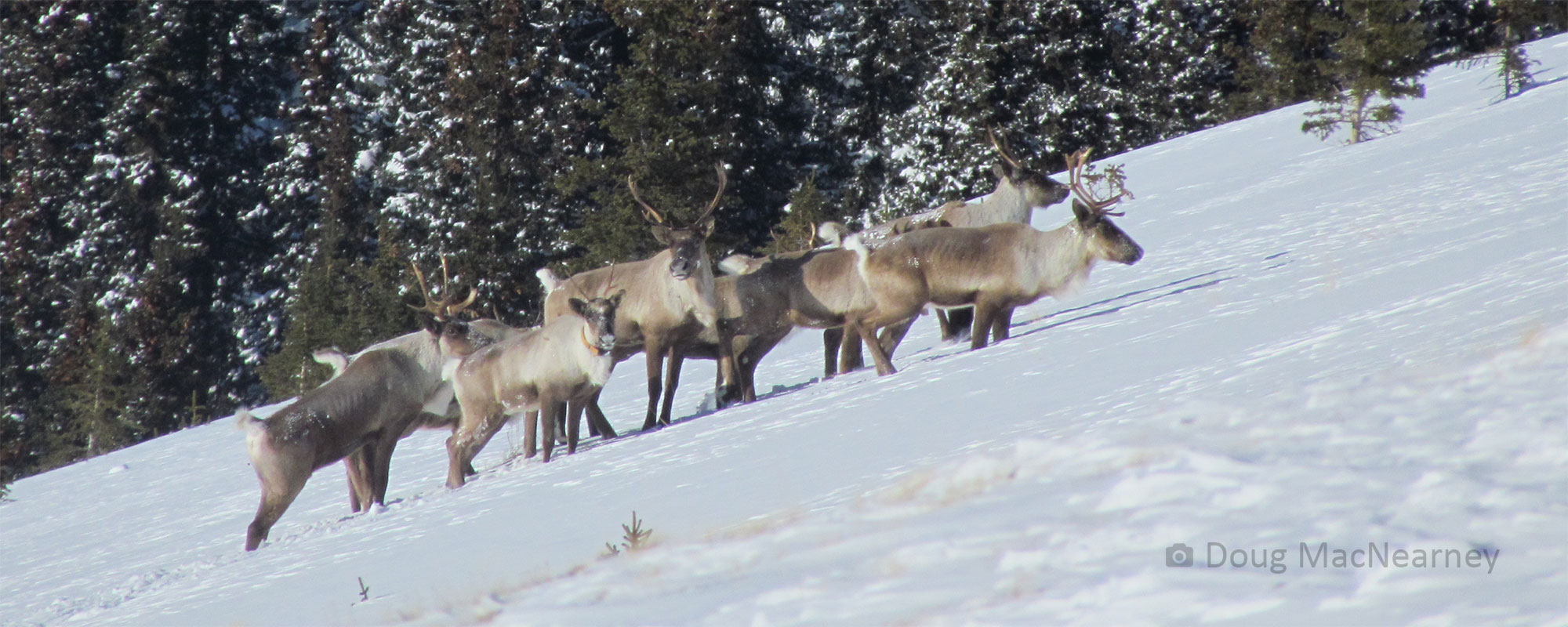
Finally, after all the hard work, it was time for us to suit up for the annual Field Tech Olympics. We had been training all summer for this very moment and stakes had never been higher as this year we were competing against not only each other, but also the caribou team. Both crews (and later the water and fish team) headed out to a rec site by the Gregg River for a day of swimming, camping, and of course competition. We were tested on the essentials: filling Nalgenes to exactly 1000ml, navigating to specific GPS points, and pacing out a perfect 100m, all the things that make a superior field technician. After the final whistle, program lead Darío, and biologists Cam and Solène tallied the points. Tragically, the grizzly crew fell short against our fellow ungulates. However, our very own Kirsty McFadyen clawed her way onto the podium taking third place, making us all very proud. Fear not, as the Field Tech Olympics return every year, and the GBMP crew is already back in training mode. Next year, expect nothing less than a full GBMP sweep on the podium.