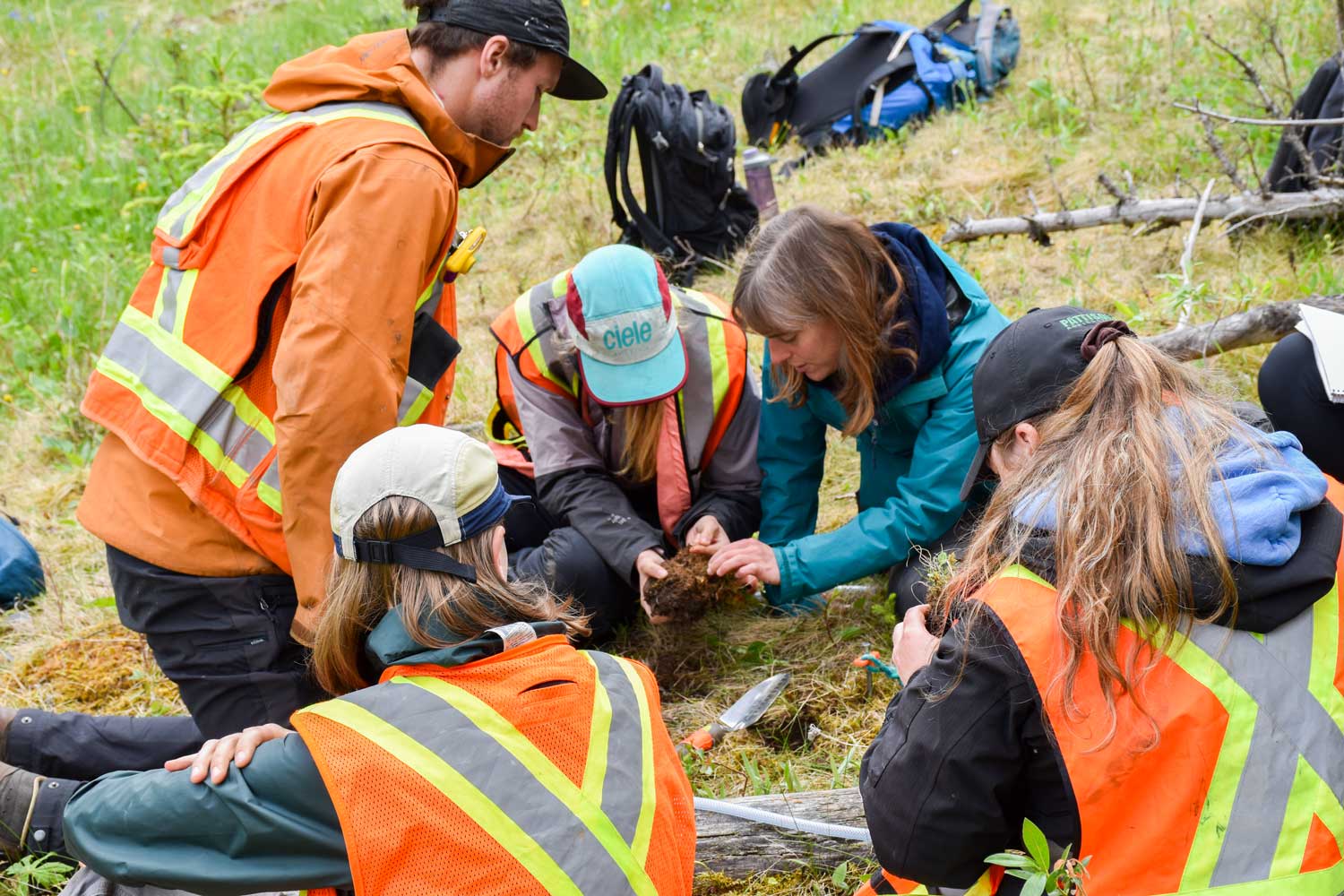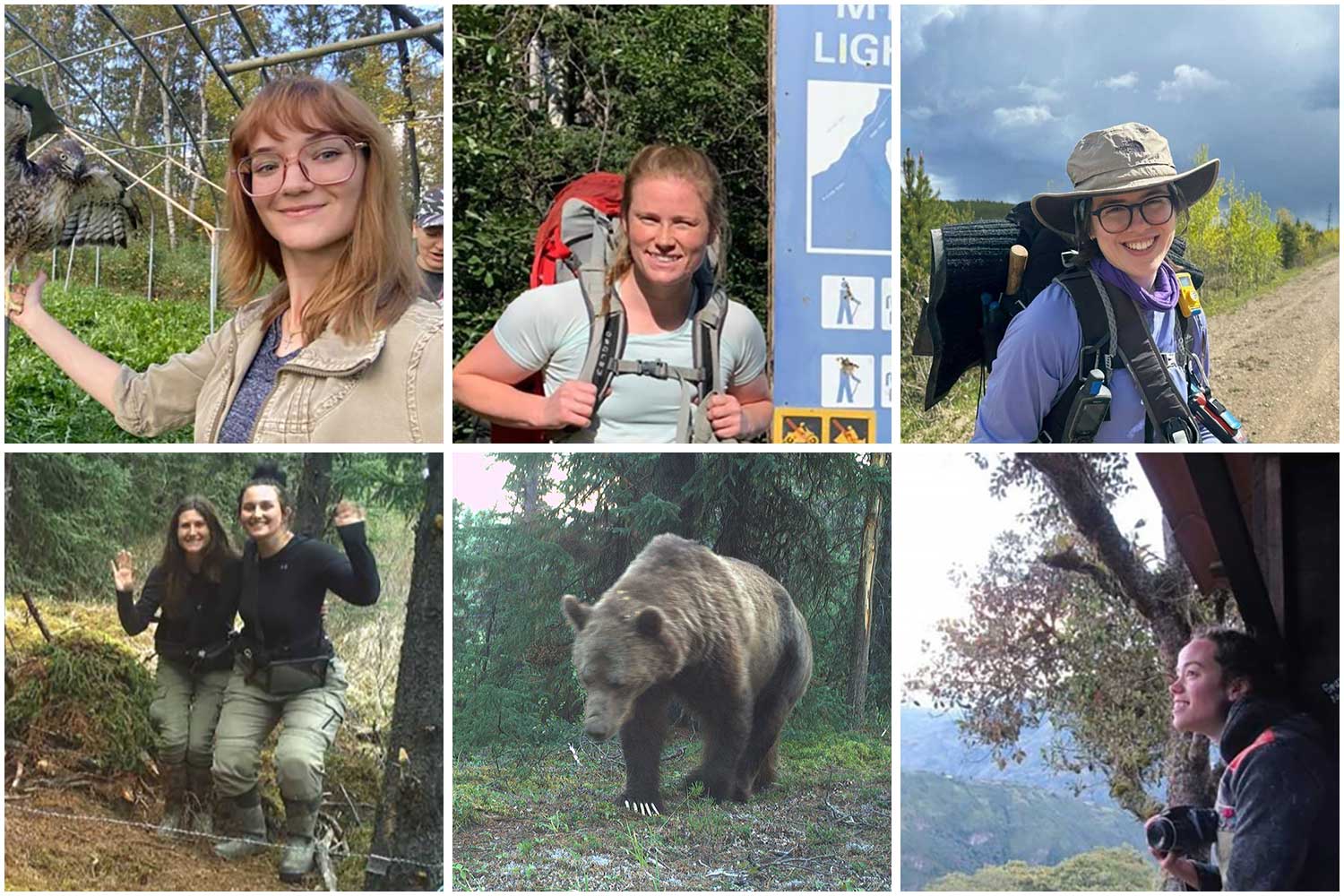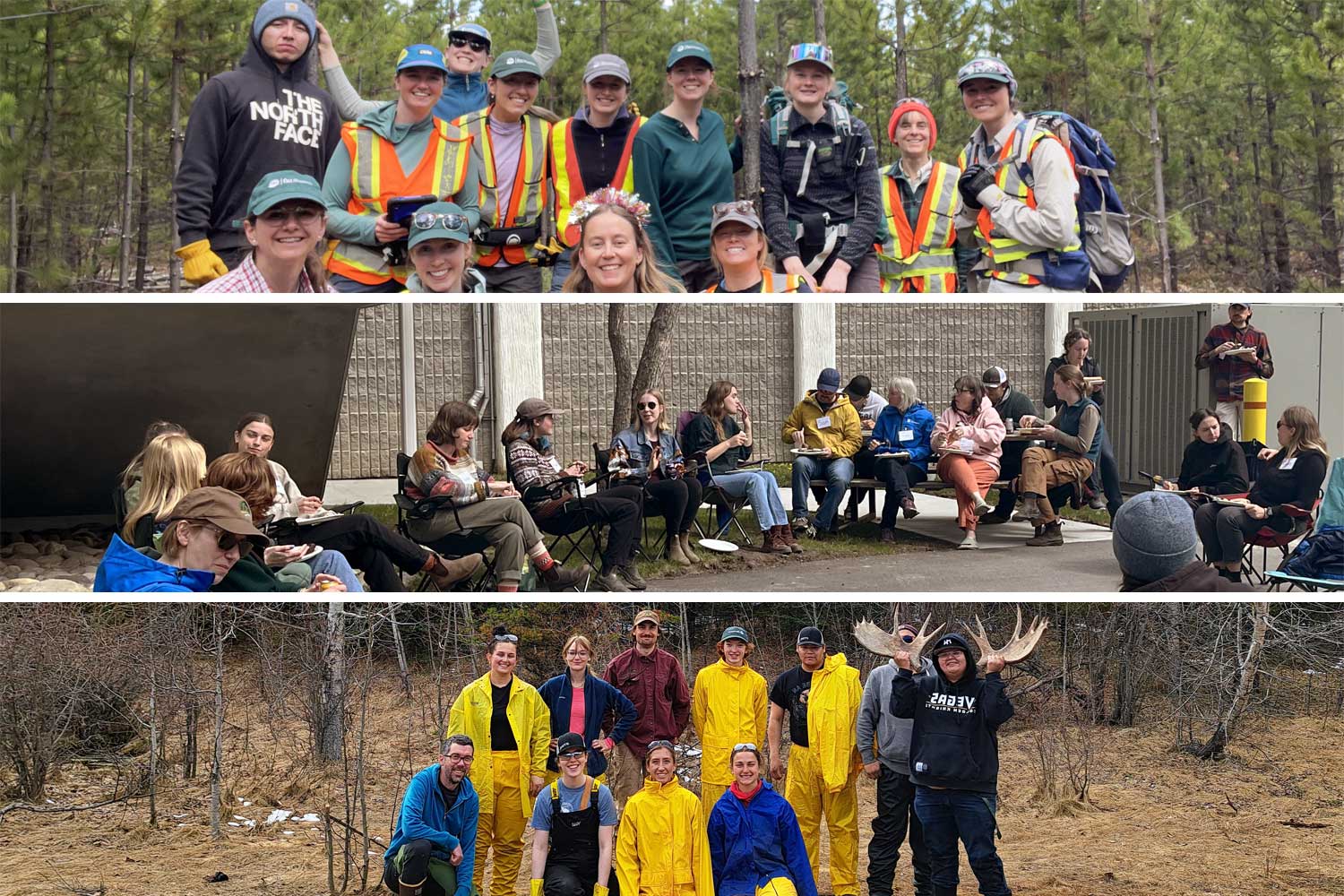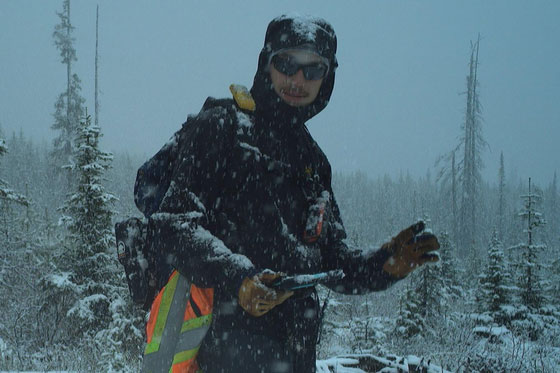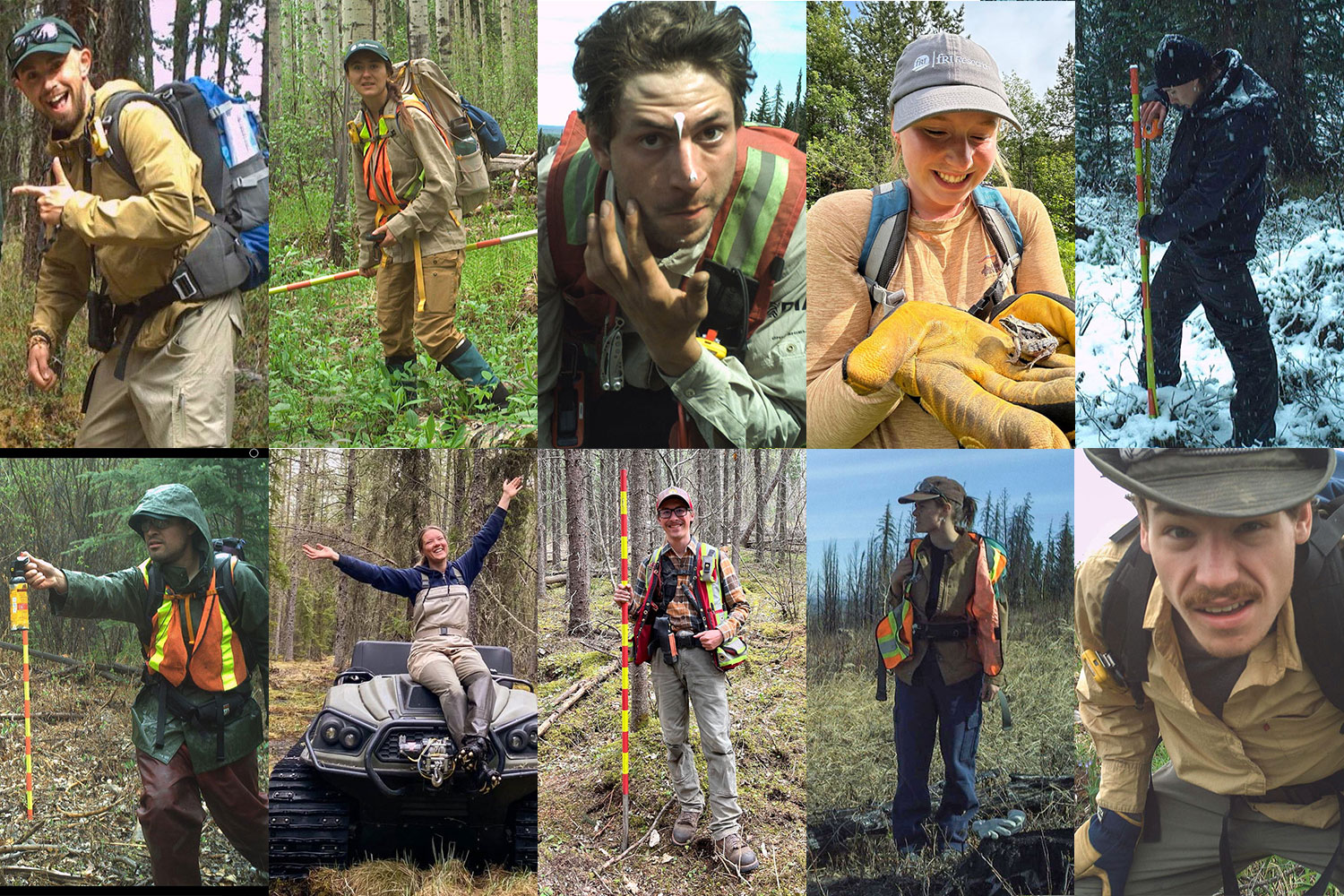
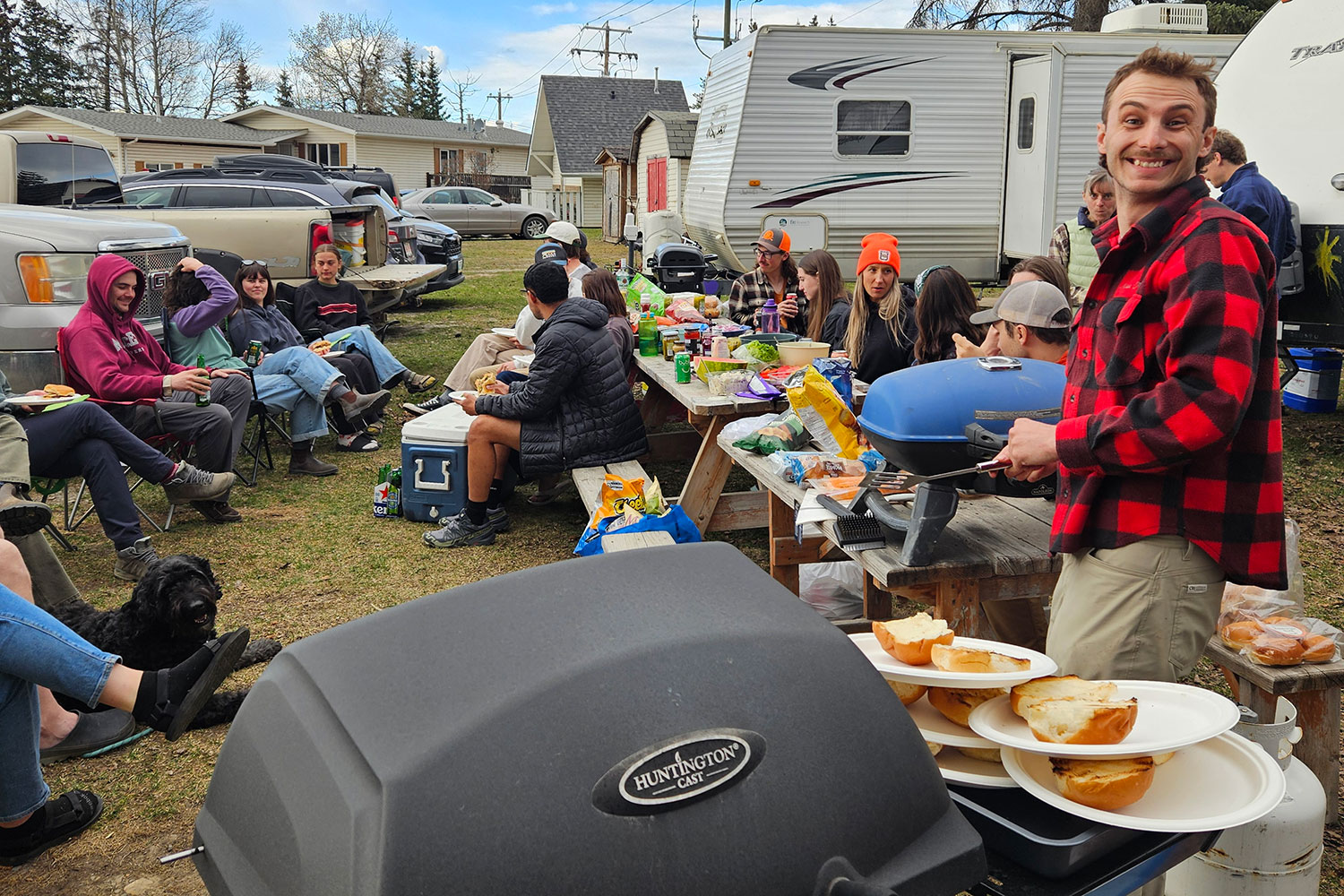
A welcome BBQ. Photo: Solène Williams
Each spring is exciting. Bursts of wildflowers decorate the ground, migrating birds stop off to sing their songs for us, and our office once again hums with the added energy of the new field crew. The mix of new and returning faces are already bringing us data of many kinds: photos from trail cameras, vegetation measurements, and fish surveys. But that’s not all.
For several years now, our tradition has been to ask all new employees for a song recommendation and a cool science fact – two pieces of data that, if nothing else, help keep the music and conversation fresh for the long drives. This year we learn how frogs keep an eye on their food and the molecular connection between bees and bananas. We also add a fun mix of stealth bangers and mega hits to our ever-growing, ever-chaotic fRI Roadtrip playlist.
Here’s what this year’s data says:
Aidan Dagenais
Caribou Crew
Nature Fact: Fungi can transfer genes to other organisms. Their presence on spacecrafts may complicate confirmation of off-planet life.
Listening to: Ride ’em Cowboy by David Allen Coe
Darko Gojsic
Caribou Crew
Nature Fact: Some rockfish species live for over 200 years, mostly in one spot.
Listening to: Wanna Be a Baller by LilTroy
Emily Hicks
Grizzly Bear Crew
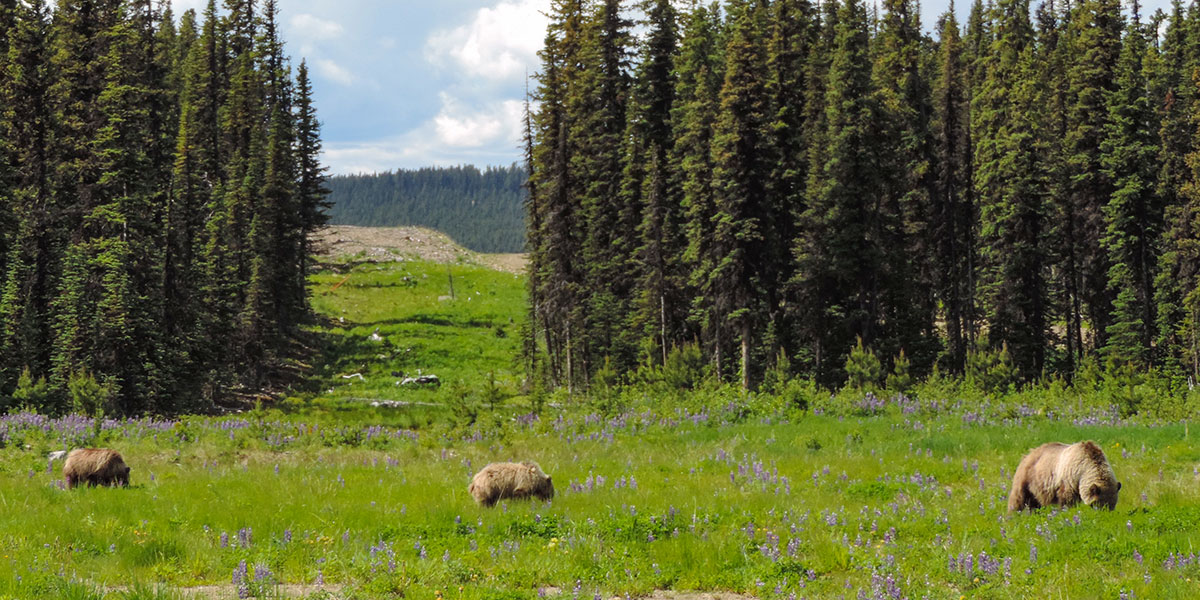
Nature Fact: Elephant seals can hold their breaths up to 2h – longer than a blue whale, but not longer than Cuvier’s beaked whale (3h 42m).
Listening to: Going on a Bear Hunt (traditional)
Hailey Gysbers
Water and Fish Crew
Nature Fact: Tree frogs near Chernobyl are darker. More skin pigment, which protects from ionizing radiation, may have been selected for.
Listening to: It’s Getting So (That a Man Can’t Go into Town Just to Have Him a Drink) by Colter Wall
Javier Puac
Caribou Crew
Nature Fact: Black-capped chickadees can grow their brains so they can remember 100s of food caches during the winter months.
Listening to: I Ran (So Far Away) by A Flock of Seagulls
Jesse Shirton
Water and Fish Crew
Nature Fact: Golden eagle nests are built up over decades; the biggest one I’ve seen looked like a VW Beetle in a tree.
Listening to: Stateside by PinkPantheress
Landon Bick
Caribou Crew
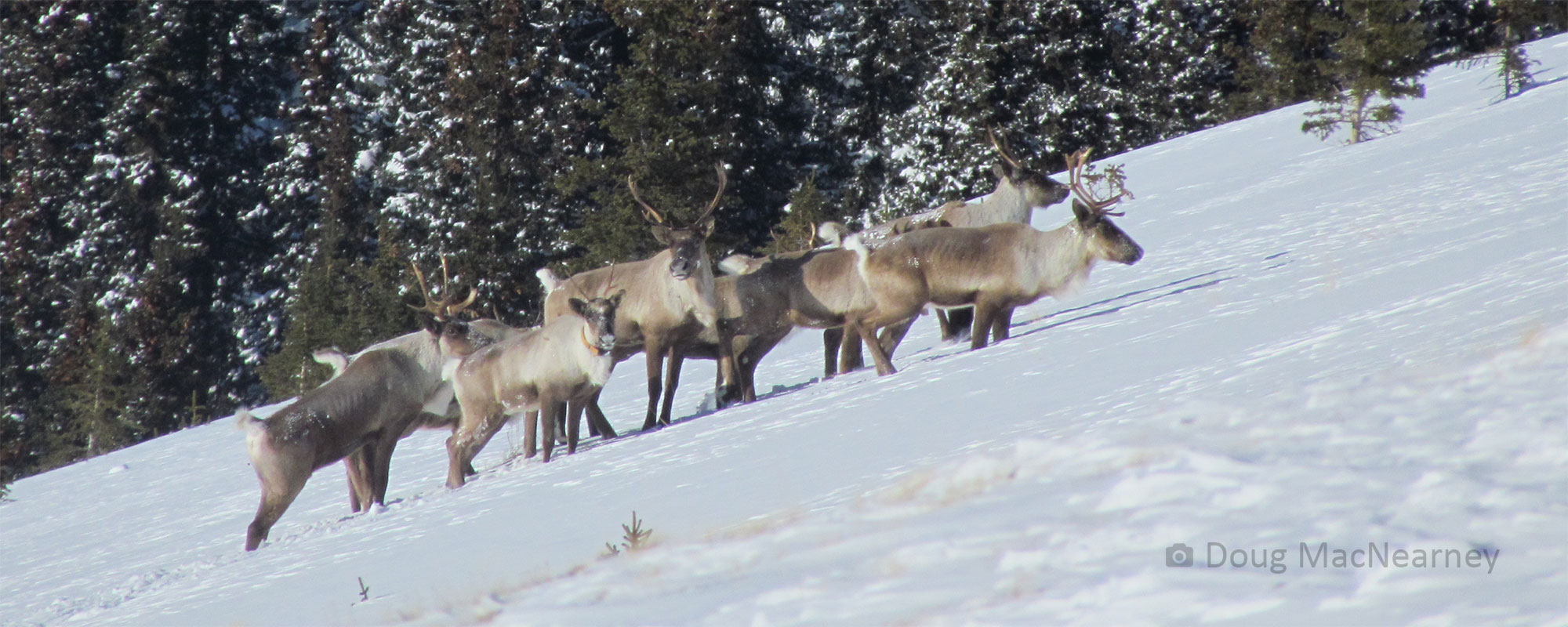
Nature Fact: Caribou have a tendon in their feet that clicks when they walk.
Listening to: Sabbra Cadabra by Black Sabbath
Madison Szafranshi
Caribou Crew
Nature Fact: Vultures may have the strongest stomach acid of all animals, with a pH near 0, which kills pathogens like anthrax and rabies.
Listening to: Vickie by Peach Pit
Sarah Desrosiers-Vaillancourt
Water and Fish Crew
Nature Fact: when swallowing, most frogs retract their eyes toward the top of their mouths to help push food down.
Listening to: The Bitch Is Back by Elton John
Sierra Makasoff
Grizzly Bear Crew
Nature Fact: The alarm pheromone produced by bees contains many molecules that also give fruit and grass their odors.
Listening to: Humbug Mountain Song by Fruit Bats
Suzanne MacKinnon
Grizzly Bear Crew
Sue Fact: My dream is to work on a cougar project.
Listening to: Big and Chunky by will.i.am
Tessa Serry
Caribou Crew
Nature Fact: green algae can live inside some salamander cells (they also turn their eggs green).
Listening to: Under the Wheels by Dr. Dog
Zach Olchowy
Grizzly Bear Crew
Nature Fact: Blue jays and oak trees share a 60-million year old mutualistic relationship where the birds are the primary oak seed dispersers.
Listening to: Appreciate’cha by Nick shoulders
fRI Research
We love all our crews equally
Nature Fact: Caterpillars in Canada mimic snakes in South America to deter predation from birds that migrate back and forth.
Listening to: former fRI Research biologist Doug Macnearney.