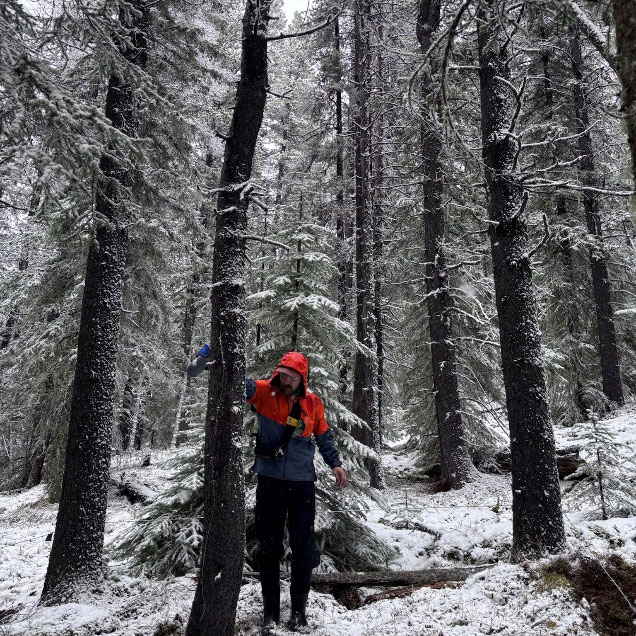
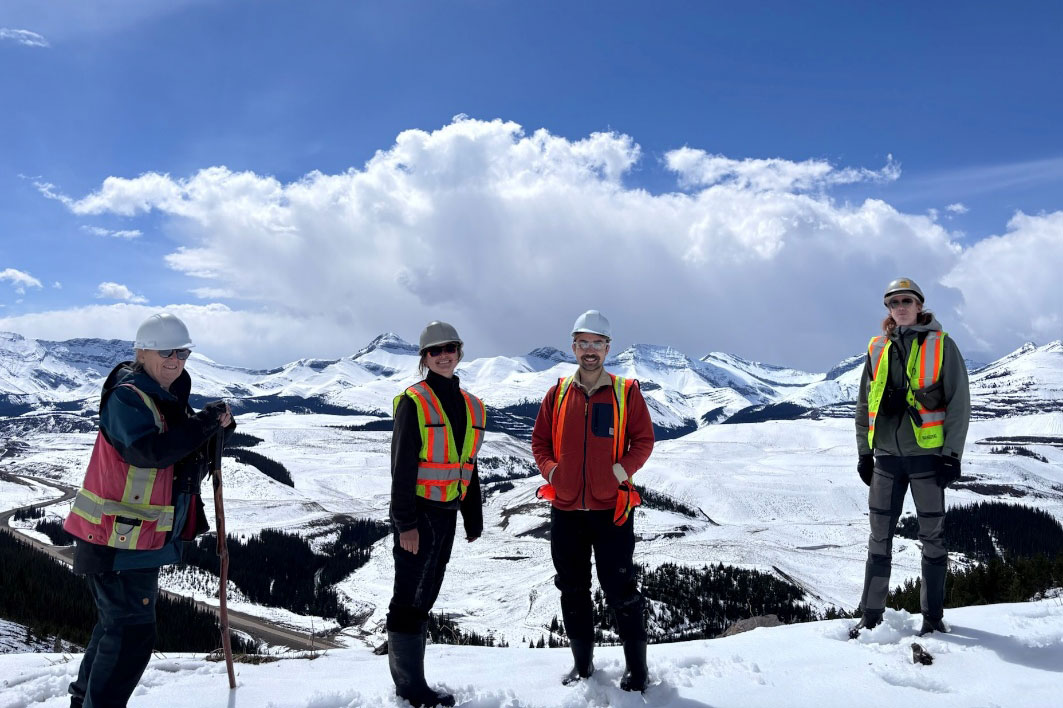
Crew members Sierra and Zach (centre) teaming up with biologists Beth and Andrew at the Cardinal River Mine.
Written by Sue MacKinnon; photos from the crew.
It’s the most wonderful time of the year – the day I’ve been counting down to since Christmas. It’s finally time to head back to Hinton and reunite with the Grizzly Bear Monitoring Project crew for another field season of grizzly bear hair snag collection.
As I travel across the country by plane, I find myself thinking back on all the memories from last season (if you’re curious, check out Sierra and my previous blog posts from 2025!). After months away from the foothills, every overwintered trail camera feels like a mystery waiting to be uncovered.
Before long, Gateway RV Park is buzzing again as fRI field crews roll in for another summer in Hinton. For the GBMP team, Sierra and I returned for another season alongside two new members of the crew: Zach, coming from Edson with an impressive repertoire of field experience, and Emily, a Hinton local currently completing her biology degree at MacEwan University in Edmonton.
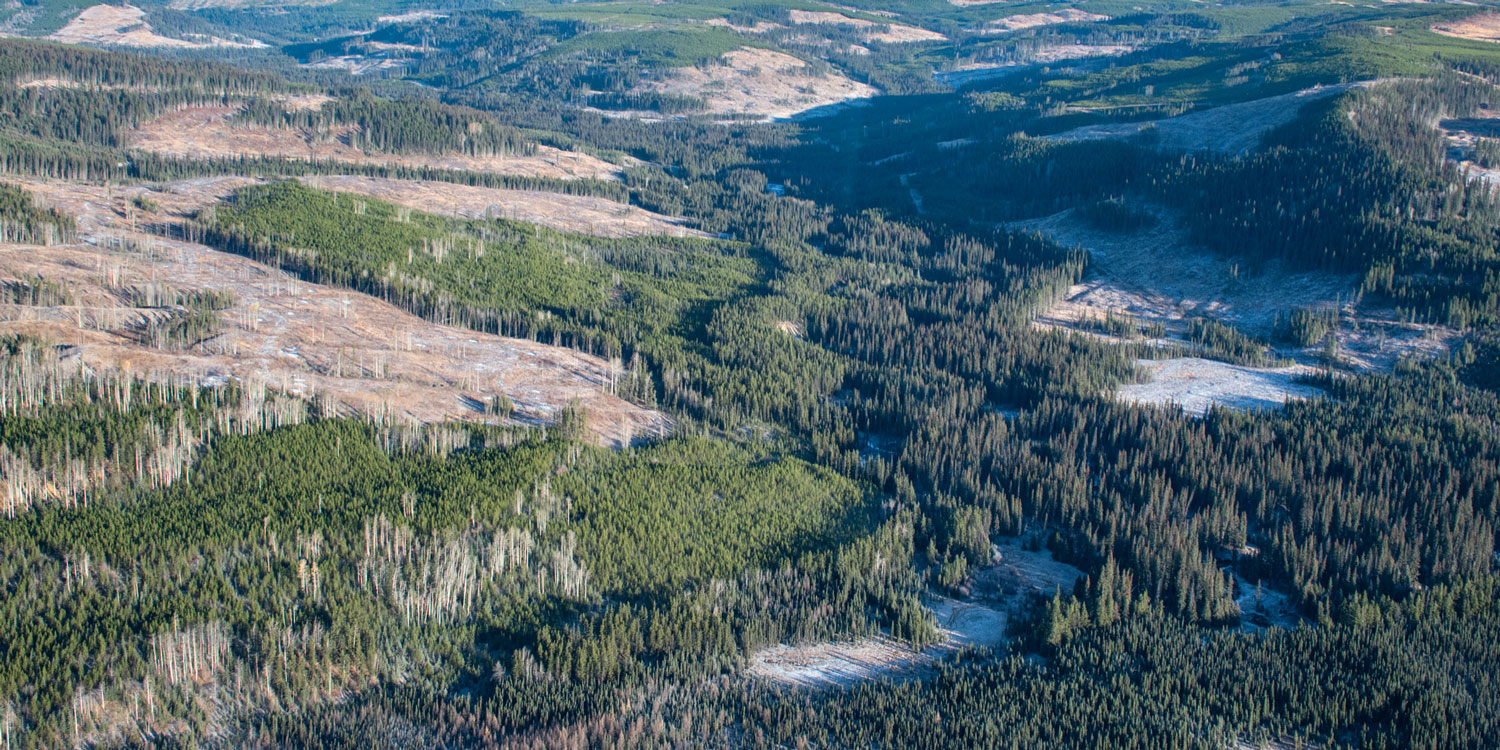
The 2026 field season is bringing plenty of new opportunities: helicopter-access sites in the harder to reach areas south Hinton, overnight tenting trips near Nordegg, biologists from the Government of Alberta joining portions of our fieldwork, and, my personal favourite, permission to establish sites on the Cardinal River Mine site. The combination of incredible mountain views and the possibility of identifying new grizzly bear individuals has me more motivated than ever for the season ahead. Each hair sample collected helps the research team better understand grizzly bear movement and population trends across the foothills region, which makes every muddy hike and long field day feel worthwhile.
But before field season officially begins comes field prep.
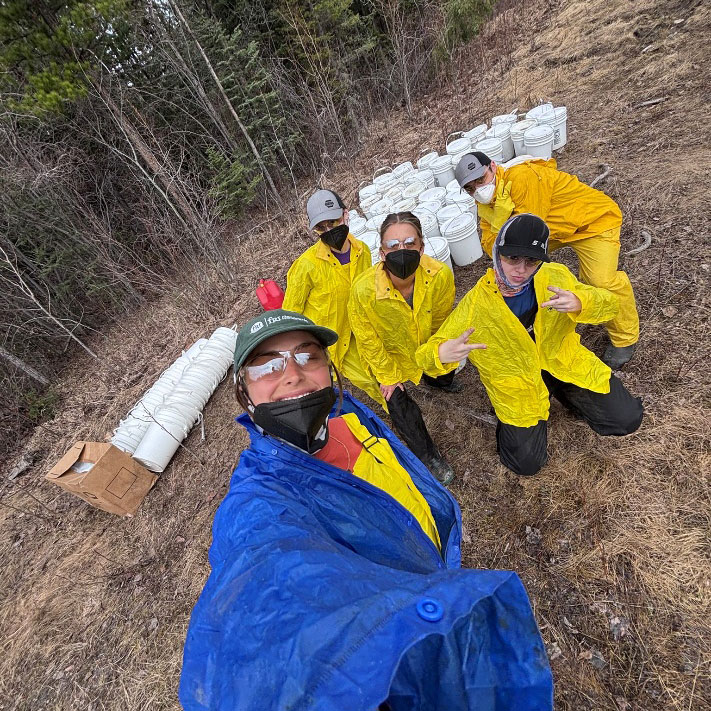
If you’ve read our previous blog posts, you already know about the less glamorous side of grizzly bear research – the cow blood attractant we use at our sites. For the new techs, there’s really no way to prepare someone for their first experience pouring and filtering buckets of blood. The smell clings to absolutely everything, and no amount of scrubbing ever seems to fully remove it from the seacan. Still, blood prep somehow always turns into a bonding experience for the crew. There’s nothing quite like blasting a good playlist and powering through hundreds of liters together to make coworkers feel more like friends.
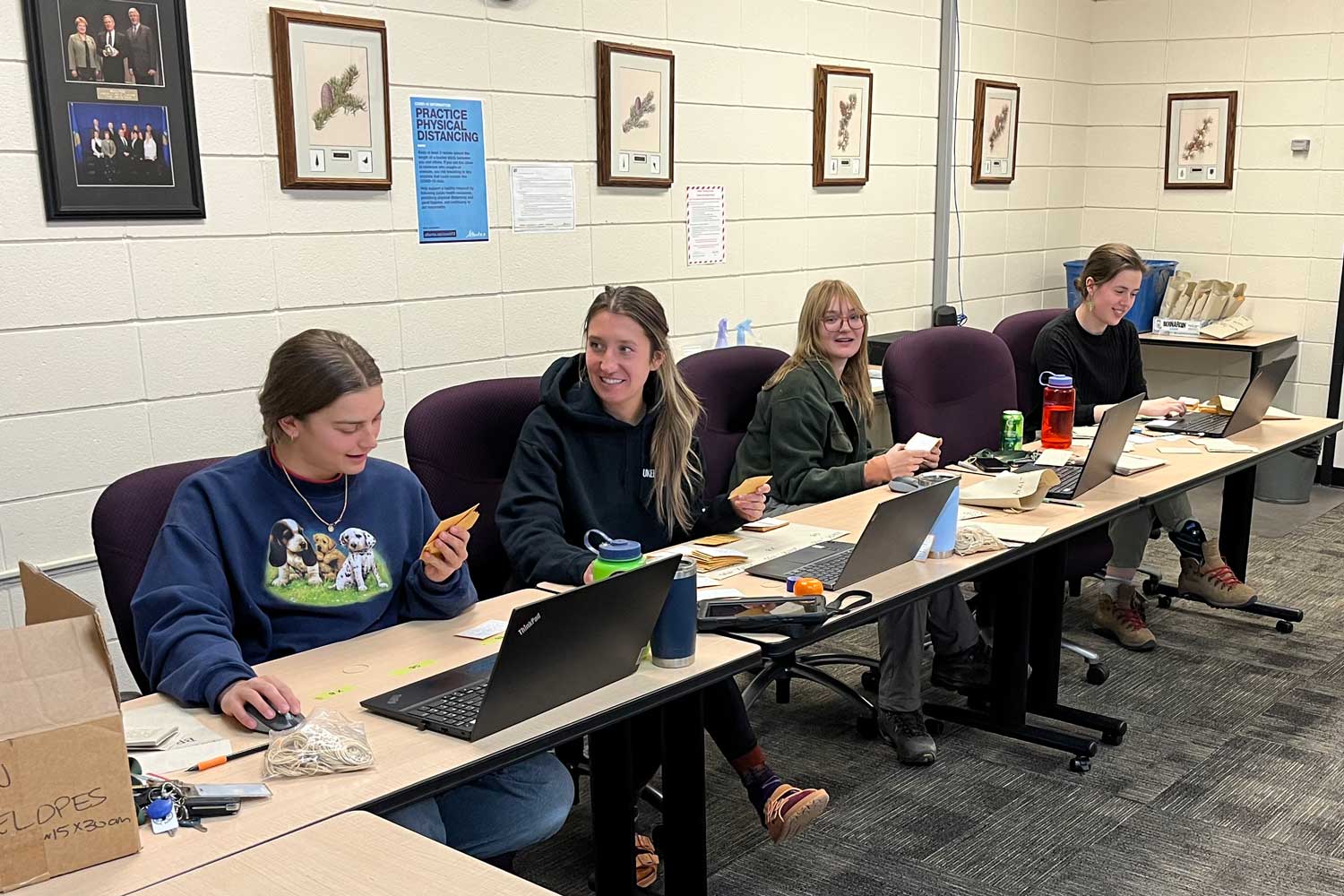
After two weeks of training, office work, and field prep, we were finally ready to head into the field. Our crew was tasked with reactivating overwintered sites and establishing new locations throughout BMA 3 in the Hinton-Nordegg region.
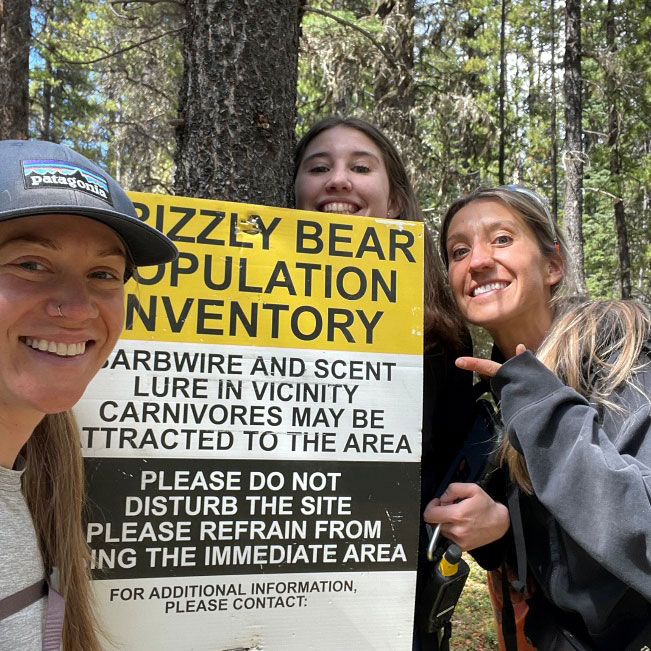
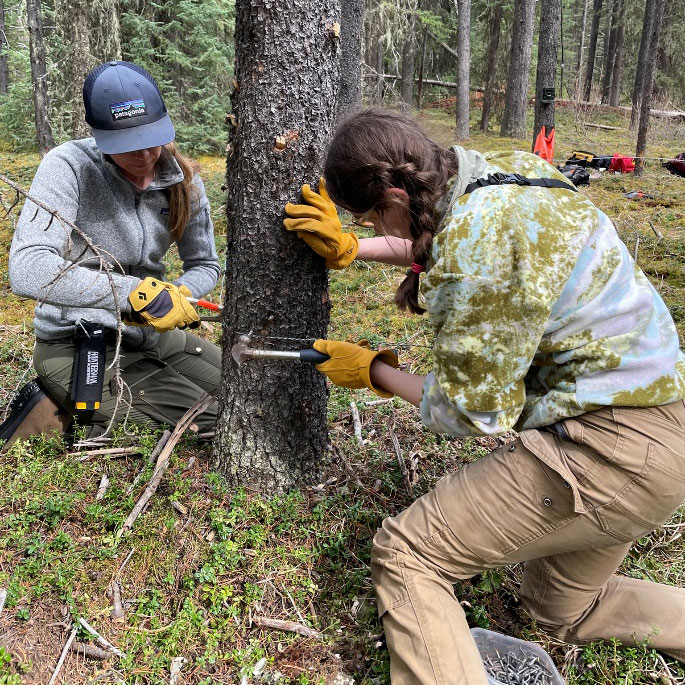
We were lucky to be joined by Government of Alberta biologists Abbey and Amber for our first couple field days. Their extensive experience and willingness to share stories and knowledge made the field days fly by. Later at the Cardinal River Mine, Sierra and Zach teamed up with Beth MacCallum and Andrew Godsalve to establish new mine sites.
The foothills wasted no time reminding us why we prepare for every possible weather condition before leaving town. Within a single day, we experienced sunshine, rain, hail, snow, and thunderstorms. One minute we were peeling off layers in the heat, and the next we were scrambling to shelter our tablets from hail pelting down around us.
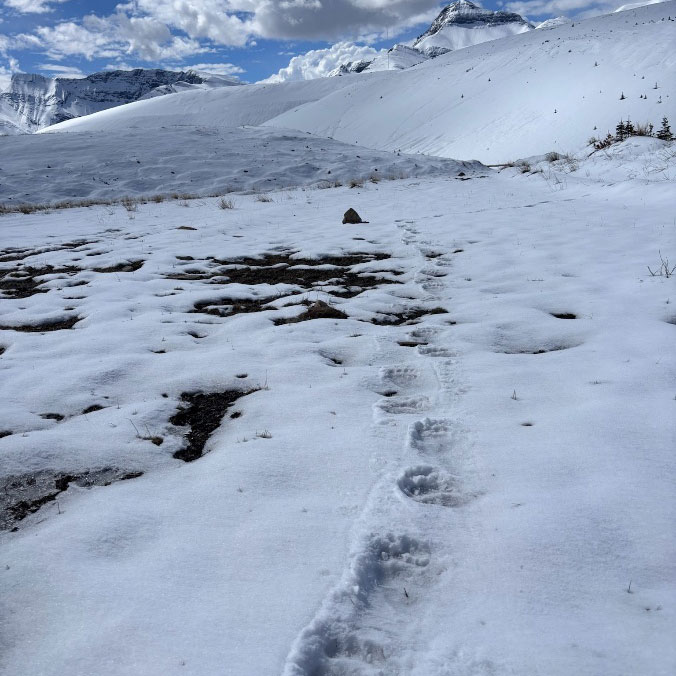
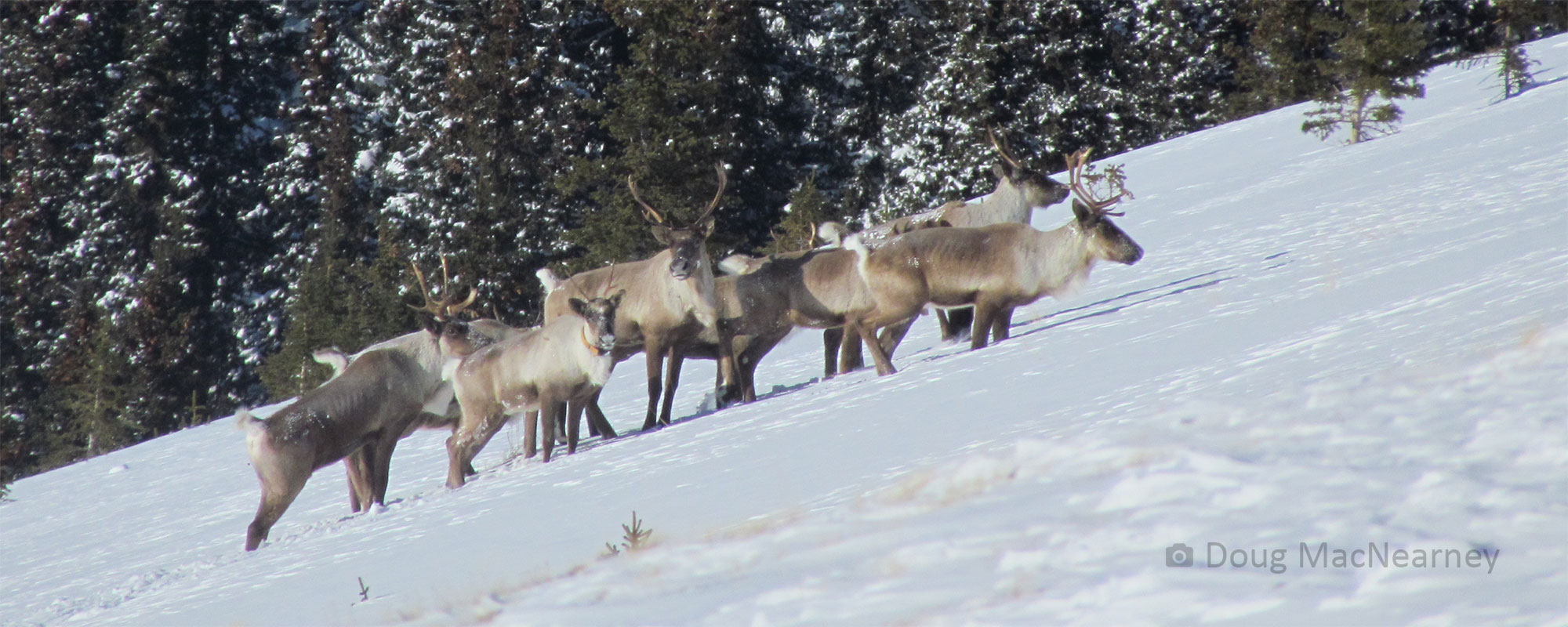
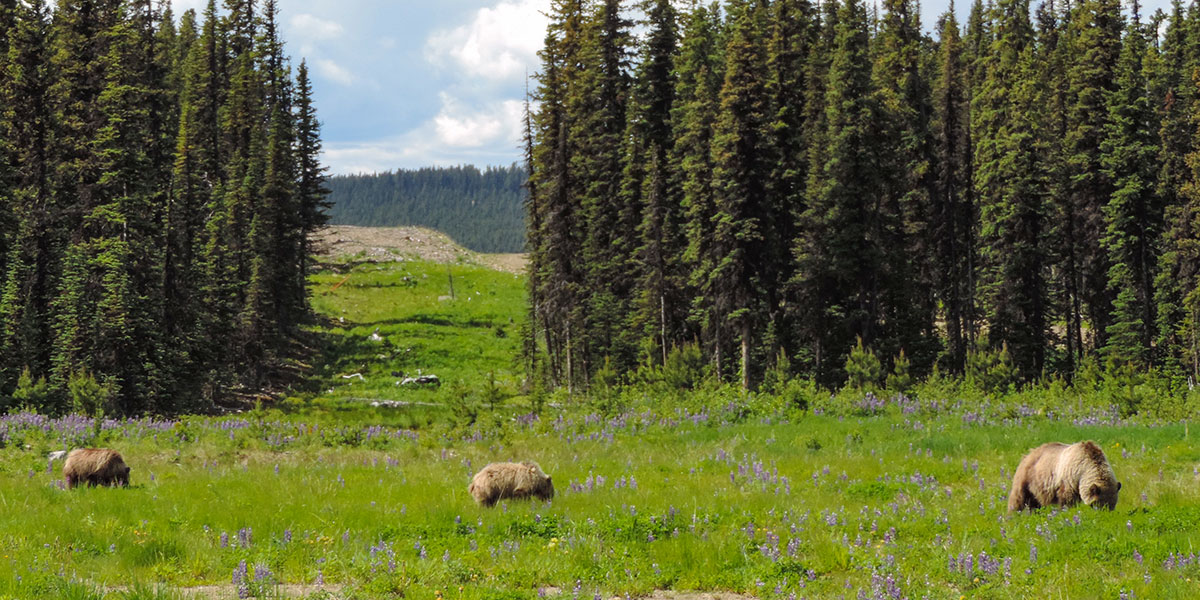
Despite the unpredictable conditions, the fieldwork itself gave us plenty to get excited about. Fresh grizzly bear tracks in the snow and mud around several sites immediately boosted morale, and three grizzly bear sightings during our first shift felt like a promising start to the season.
Checking trail camera that had been sitting untouched since October was equally exciting – every SD card felt like opening a surprise package. Along with grizzlies, our cameras captured wolverines, cougars, wolves, coyotes, lynx, martens, black bears, and other curious visitors over the winter months. Moments like these are exactly why I love this project.
Of course, field season rarely goes entirely according to plan. Between lingering snow, difficult access conditions, and the sheer amount of work to accomplish early in the season, our field team quickly found ourselves falling behind schedule. Thankfully, our program lead Darío, senior biologist Cam, and biologist Kirsty stepped in to help us catch up. Having supervisors willing to throw on field gear and work alongside the techs speaks to the supportive environment within the GBMP.
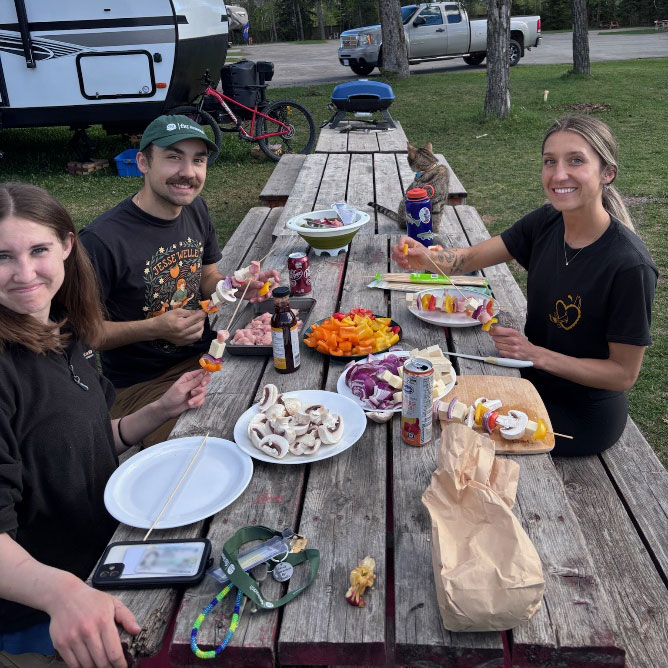
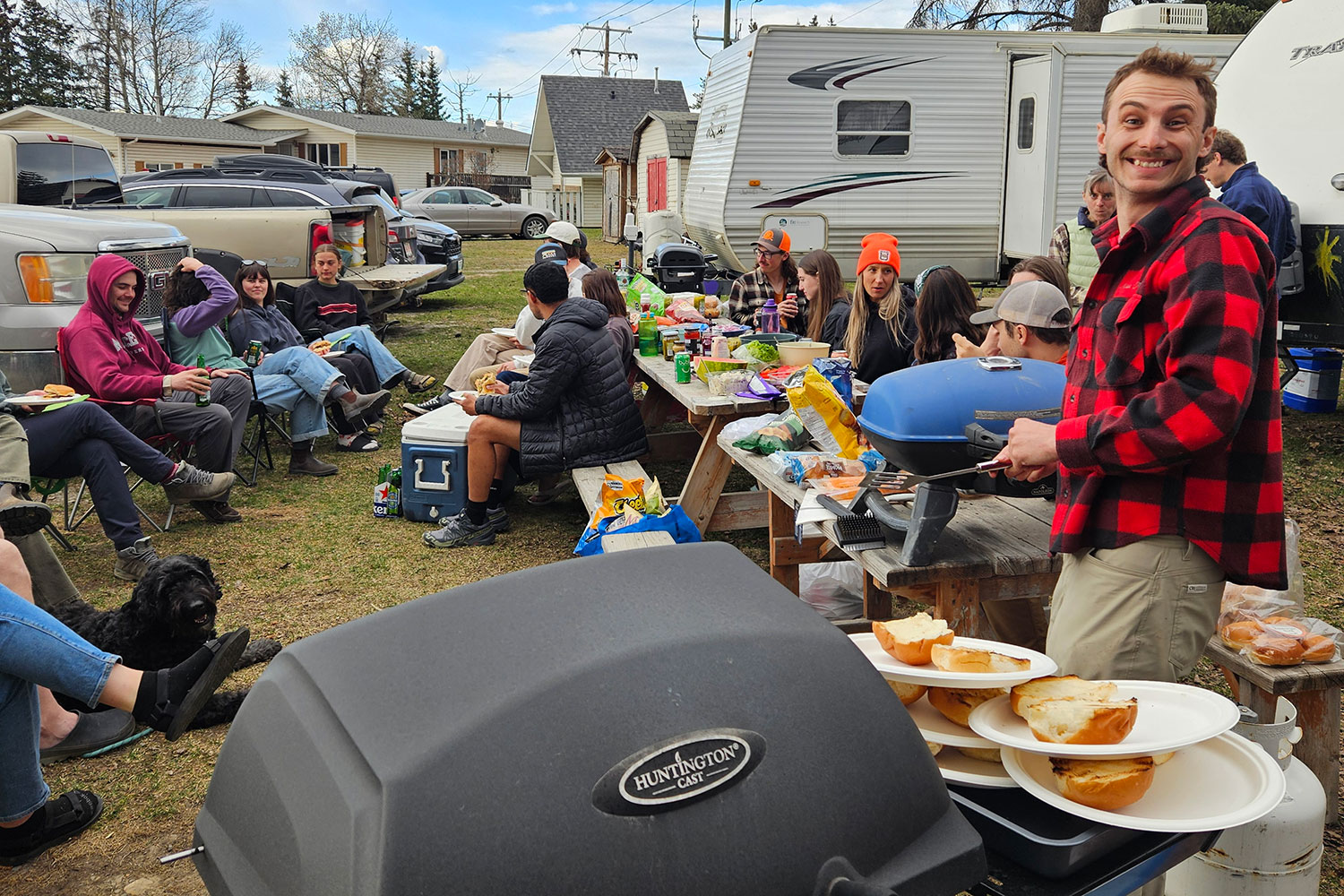
Most importantly, field season isn’t just about the work. Some of the best moments happen after the trucks are parked for the evening. Between fRI-wide BBQs, lawn games, dinner at Folding Mountain Brewery, birthday celebrations, card games, and the usual after-shift shenanigans, there’s never a shortage of things to do. Even the quieter evenings back at the trailer park feel special – sharing photos from the day, swapping wildlife stories over dinner, and catching up around the BBQ. I was also happy to see that Sew, the local cat who frequently stops by the trailers for visits, has returned for another season as well.
Between the blood filtering bonding, unpredictable weather, wildlife sightings, and countless laughs with the crew, the season is already off to an unforgettable start. It feels good to be back in the foothills doing the work I love. Stay tuned for our next blog post as we travel to Swan Hills to establish new sites and find out which curious critters are first to investigate our freshly lure-scented sites throughout the Hinton-Nordegg region.