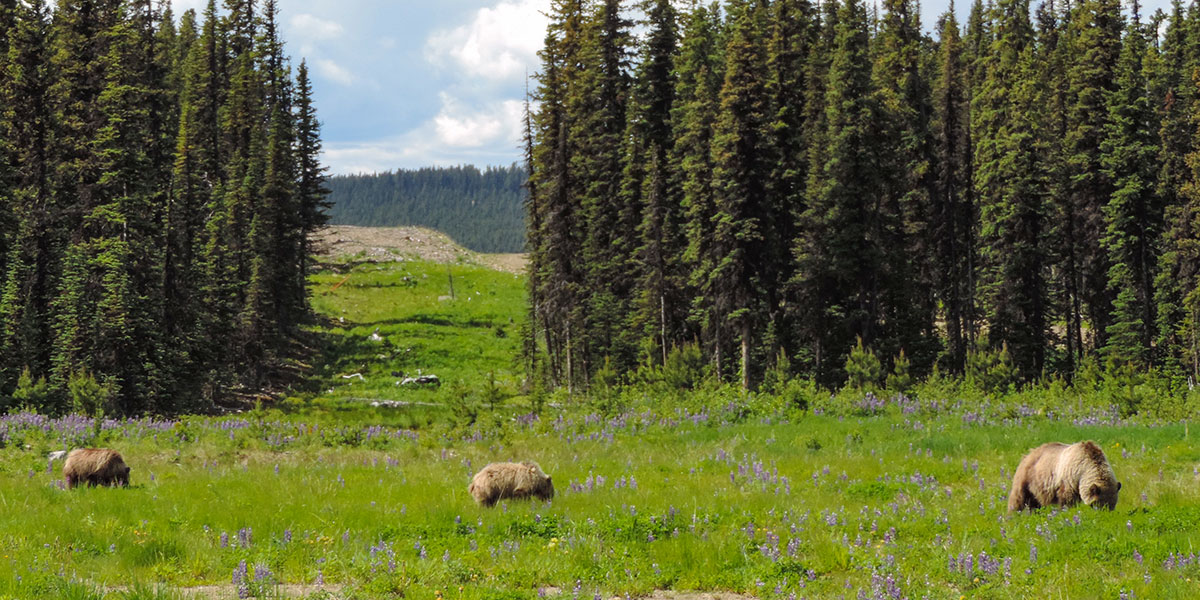
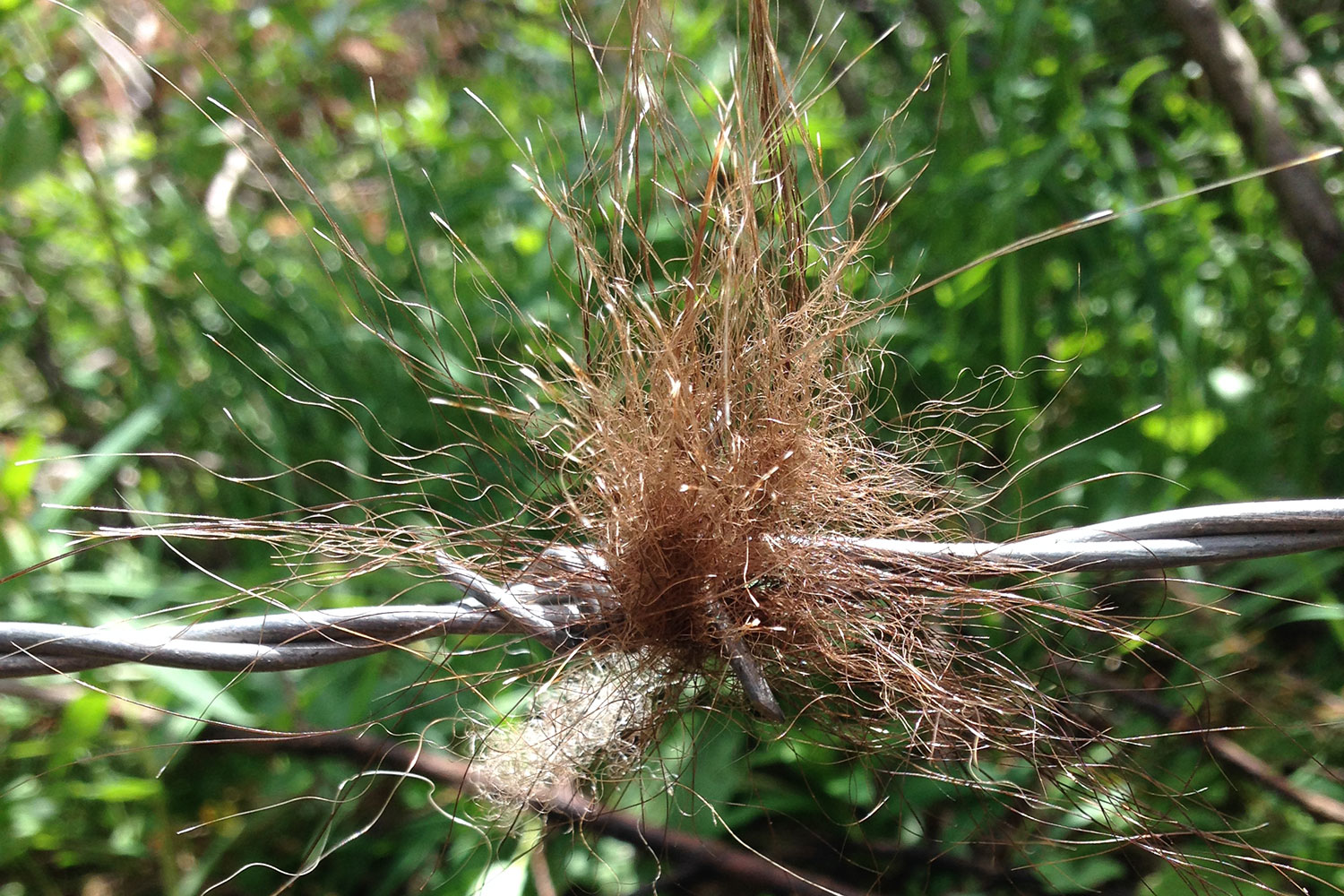
We’ve collected thousands of grizzly bear hair samples using just a strand of barbed wire and a stinky pile of branches. It’s efficient, non-invasive for the bear, and gives us the DNA we need to identify individual bears, their sex, and family relationships. This lets us deduce trends in an area’s bear population, but Dr. Darío Fernández-Bellon, our Grizzly Bear Lead, wants even more.
“Anytime we do work we try to maximize what we get out of our efforts,” he says. “We want to better understand what is driving population trends, and for that we really want to know things like the ratio of young and old bears, and the reproductive rate of females.”
DNA can’t tell us those things, but in theory, hormones like testosterone or estrogen can. The amount of each hormone deposited in a bear’s hair is related to the sex and age of the bear, and what the bear is experiencing – things like starvation, pregnancy, or lactation. Scientists have worked out some of these relationships for many animals, but not yet for grizzly bears. The key to decoding bear hormones in our stash of thousands of hair samples, is a second, smaller set of envelopes with hair that we collected in a very different way.
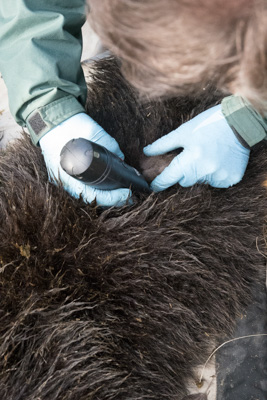
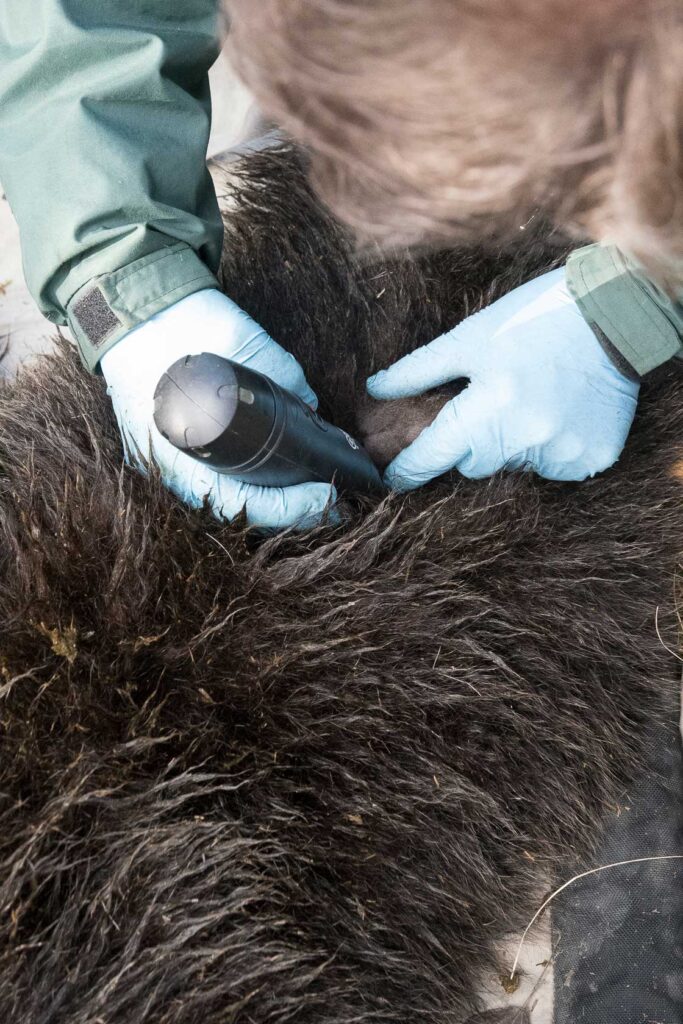
For two decades, the Grizzly Bear Program was capturing bears to fit them with GPS collars. This let us track their home ranges around Alberta for the first time, and see what kinds of habitat they used and avoided. Over the years, we caught about 130, and while each bear was sedated, we collected blood, tissue, and hair samples.
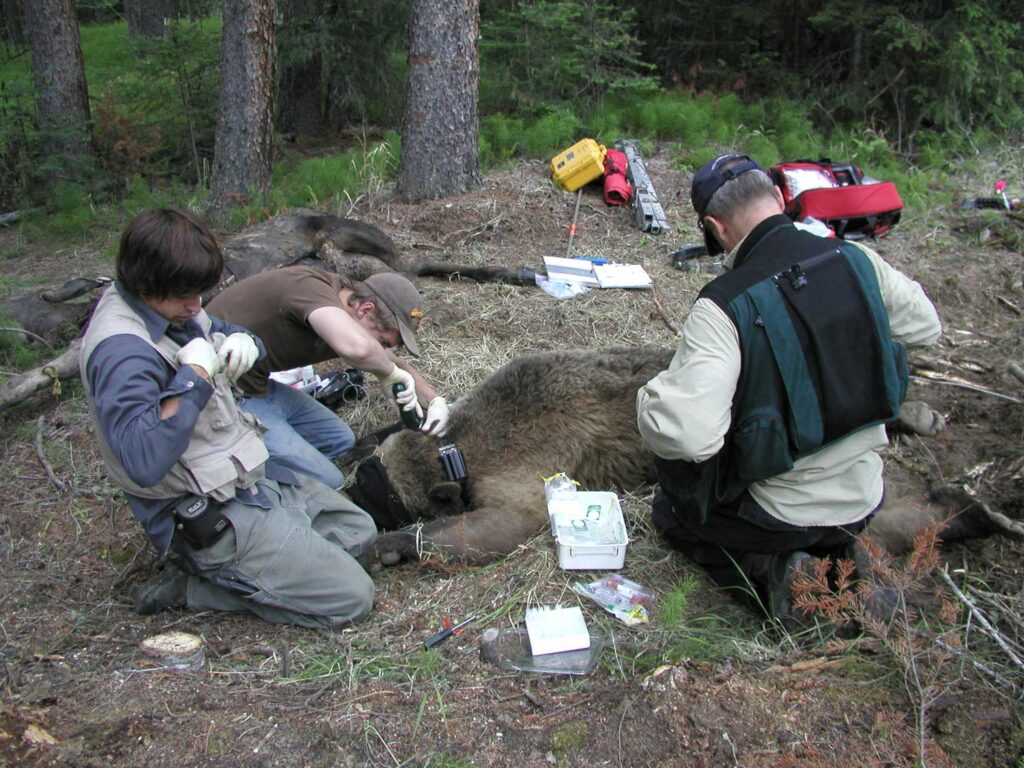
“The main focus was GPS collaring – they had no immediate plan for the hair,” says Fernández-Bellon.
In a new study, we sent the old hair samples from those 130 captured bears to our partners at the University of Victoria’s Proteomics Centre. Since we collected the hair samples while handling the bears, we knew whether they were male or female, sub-adults or adults, and in the case of females, if they were lactating, pregnant, or had cubs. In the lab, they used a relatively small amount of hair – 25mg – and carefully separated out and measured the concentrations of 23 hormones that we thought might be relevant.
Next, we looked at which hormone concentrations and ratios were different for each individual parameter and found that 16 of the 23 hormones were significant. By testing different combinations of those concentrations and ratios, we found which did the best job of predicting if, say if a bear was male, or if a bear was a female with cubs. Finally, we checked those predictions against the data we collected during the bear’s capture to gauge how accurate our predictions were.
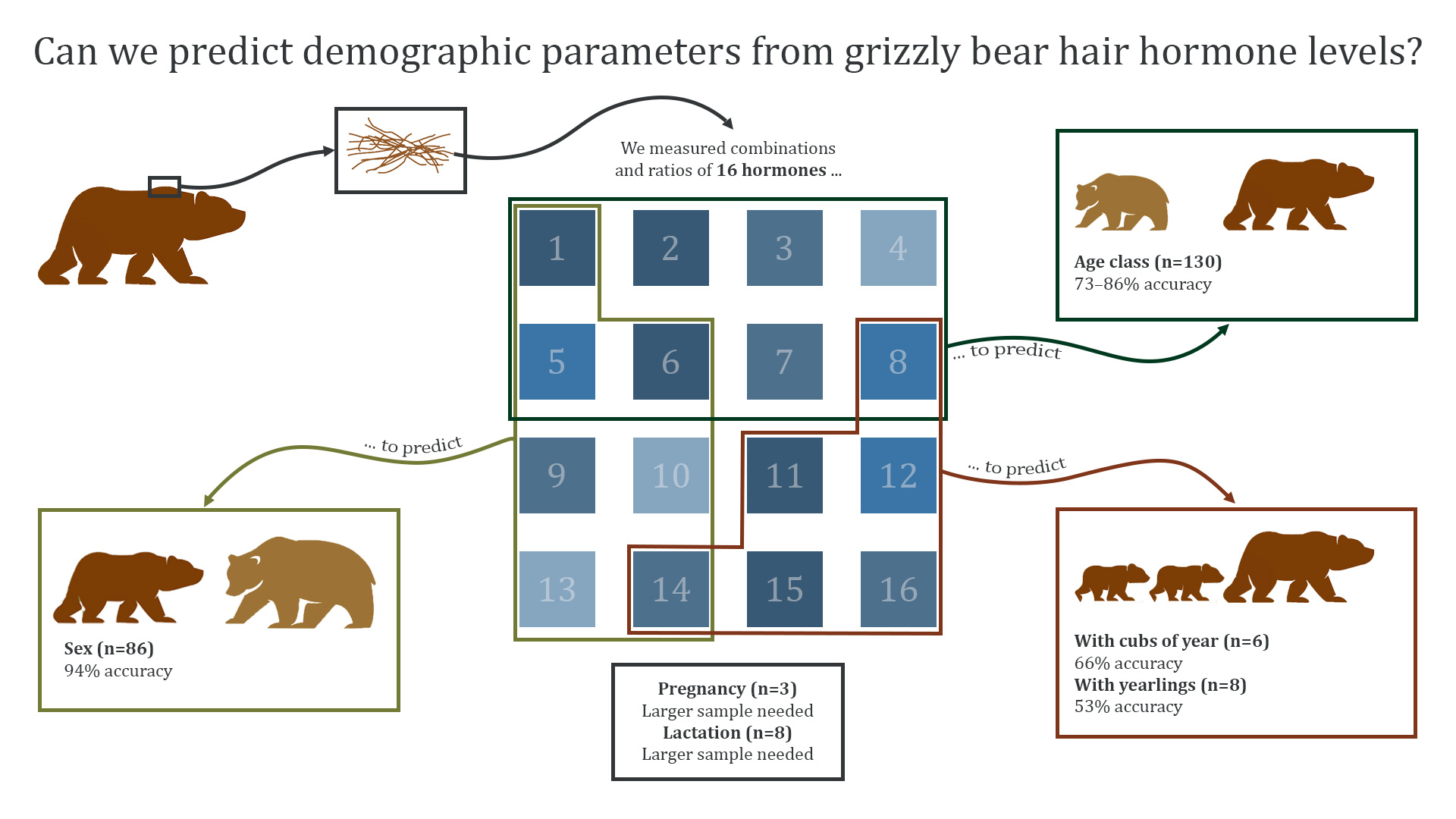
For example, looking at the concentrations of four individual hormones, two classes of hormones, and the ratio of testosterone to progesterone, we can correctly guess whether a male bear is an adult or subadult 86% of the time.
Although it took many years of hard effort to capture 130 grizzly bears, sample size was still an issue when the team tried to predict female reproductive status – just 3 of the bears were pregnant at the time of capture, 8 were lactating, and 6 had young cubs. These low sample sizes meant that we could not predict pregnancy or lactation, and could only correctly predict if a female had a cub under 1-year old two out of three times. More samples from bears whose status we know would help us improve our accuracy on every prediction, although some things, like differences between males and females, will always have a stronger effect on hormone levels than a temporary status like whether a female has cubs.
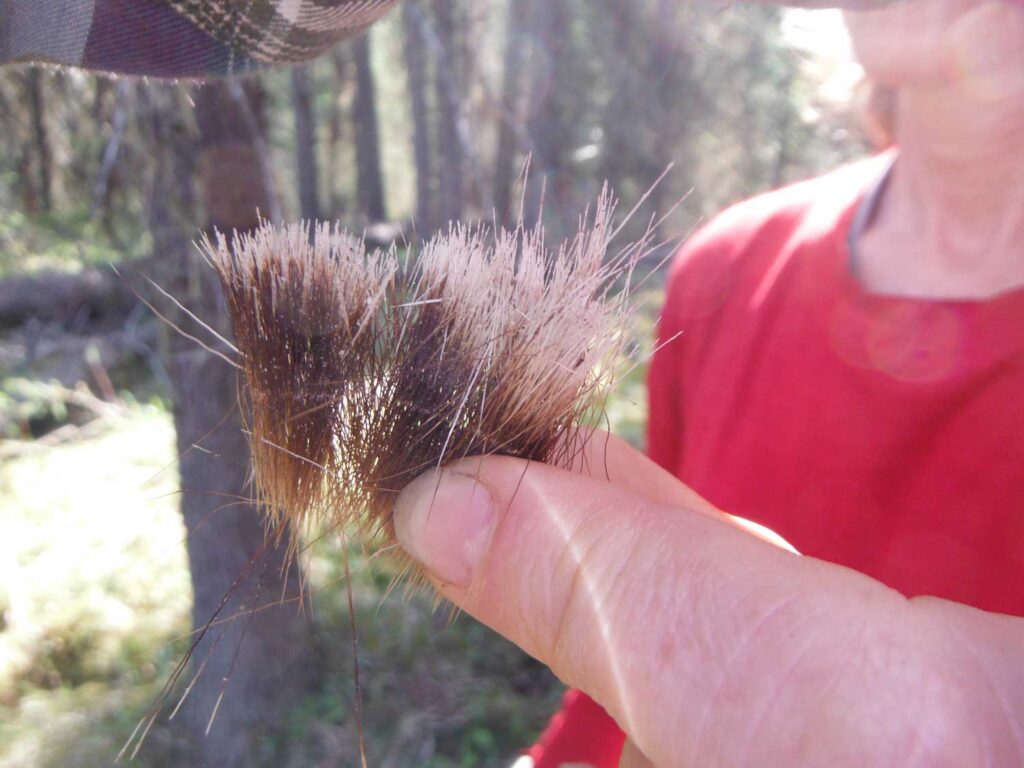
25mg of hair is still a bit high. Some snags are just a couple hairs and weigh far less than this, so we want to further reduce the amount of hair these lab tests require. We are also experimenting with ways to combine multiple hair samples when we can verify with trail cameras that they came from the same bear.
This work already puts us in a position where we can use our familiar genetics process to identify individual bears and their sex, then take the leftover hair to measure hormone profiles and determine if they are sub-adults or adults, and for confirmed adult female bears, see if they have cubs.
“Knowing the age structure of a population and the rate of females with cubs is what’s important for understanding and managing bear populations,” says Fernández-Bellon. “The genetics tells us which way a population is trending, but the hormones can explain the drivers of those trends.”